
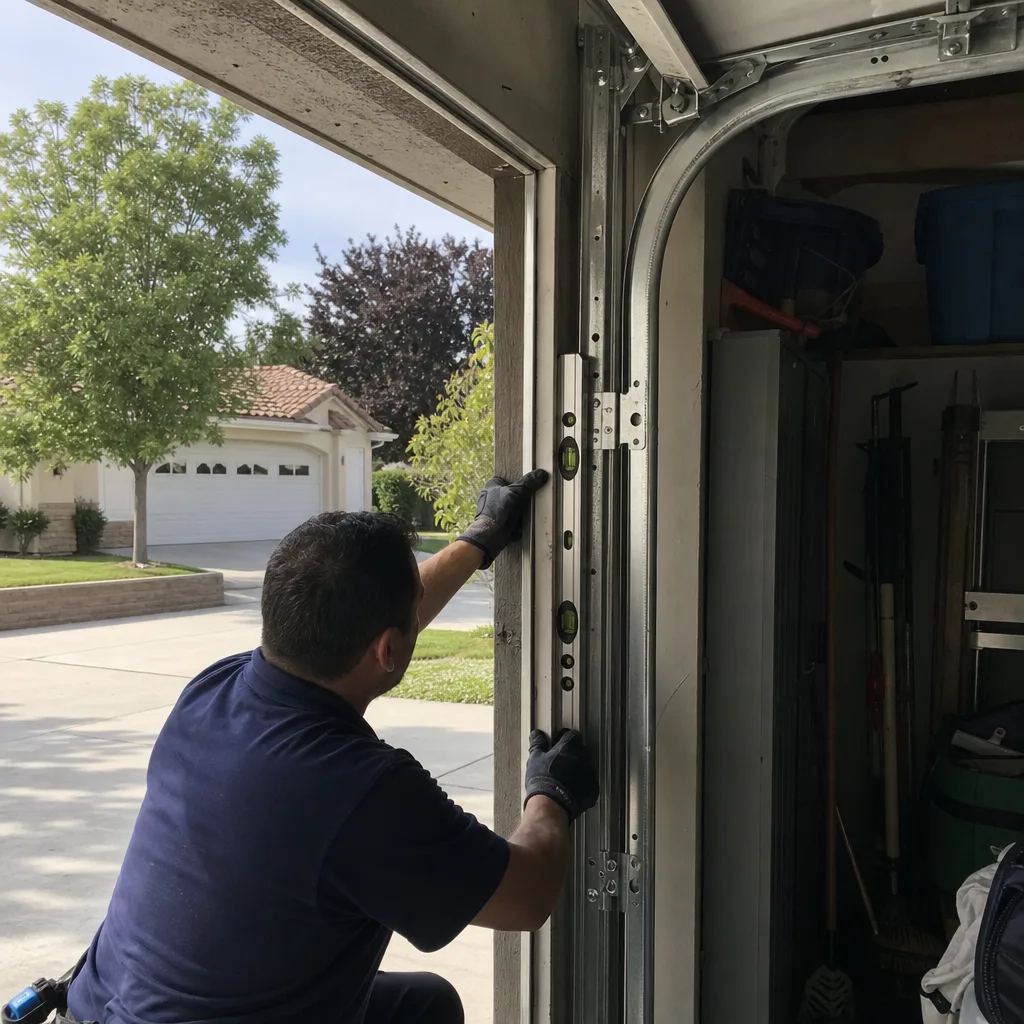
Last updated November 3, 2026
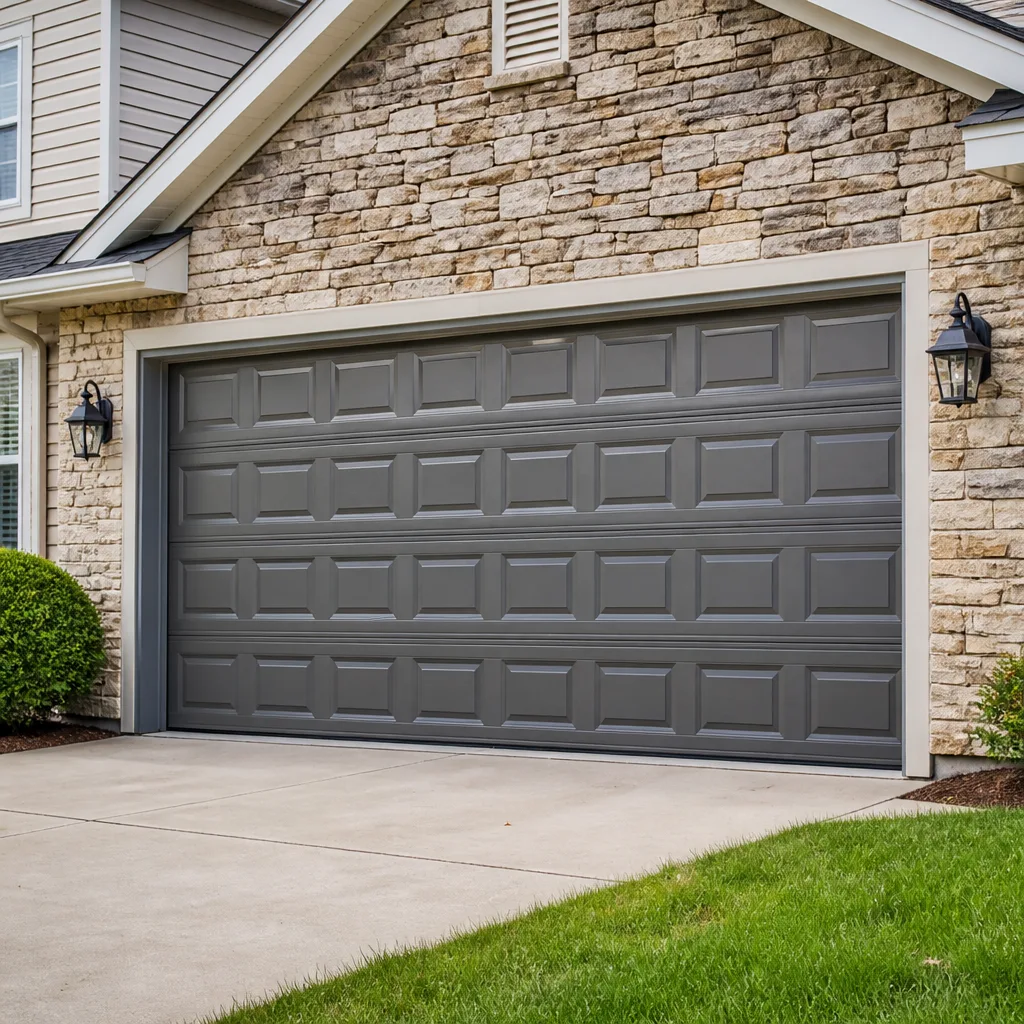 Raised-panel steel
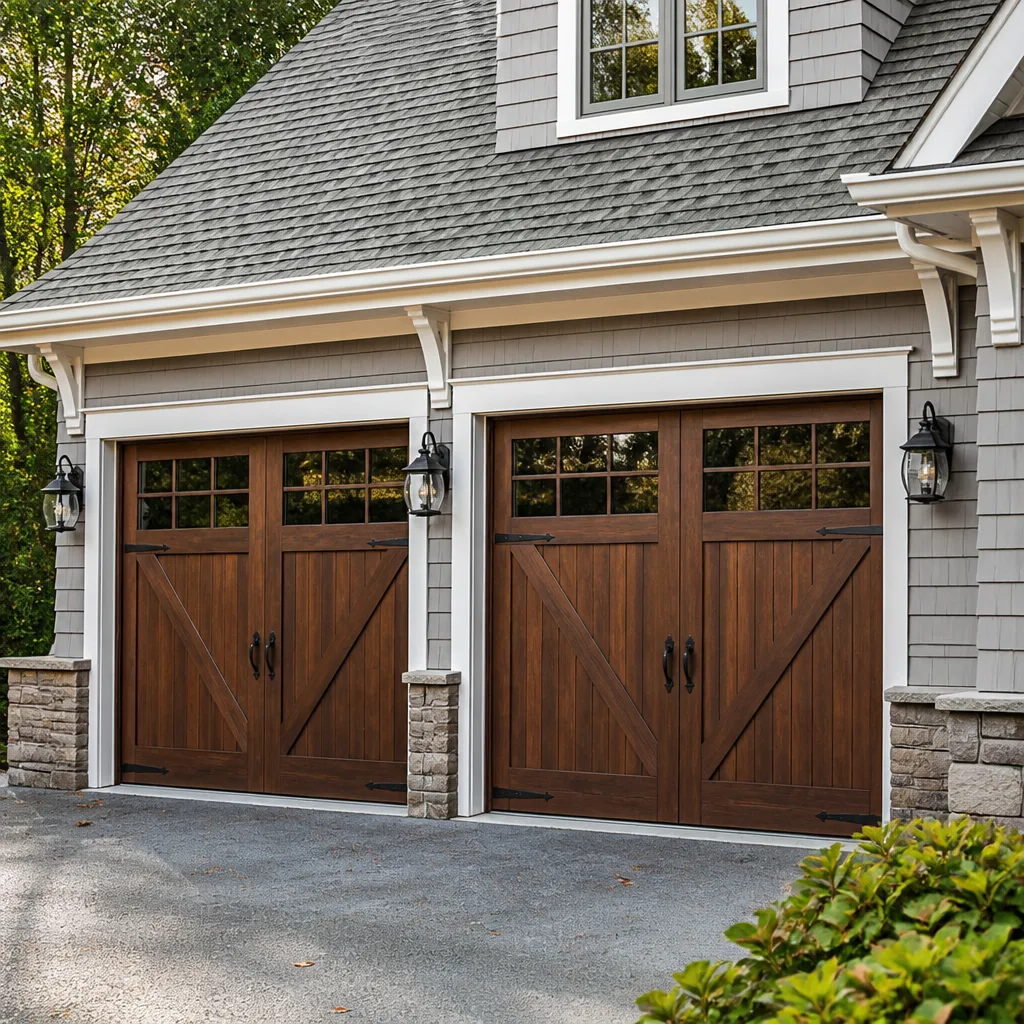 Carriage house
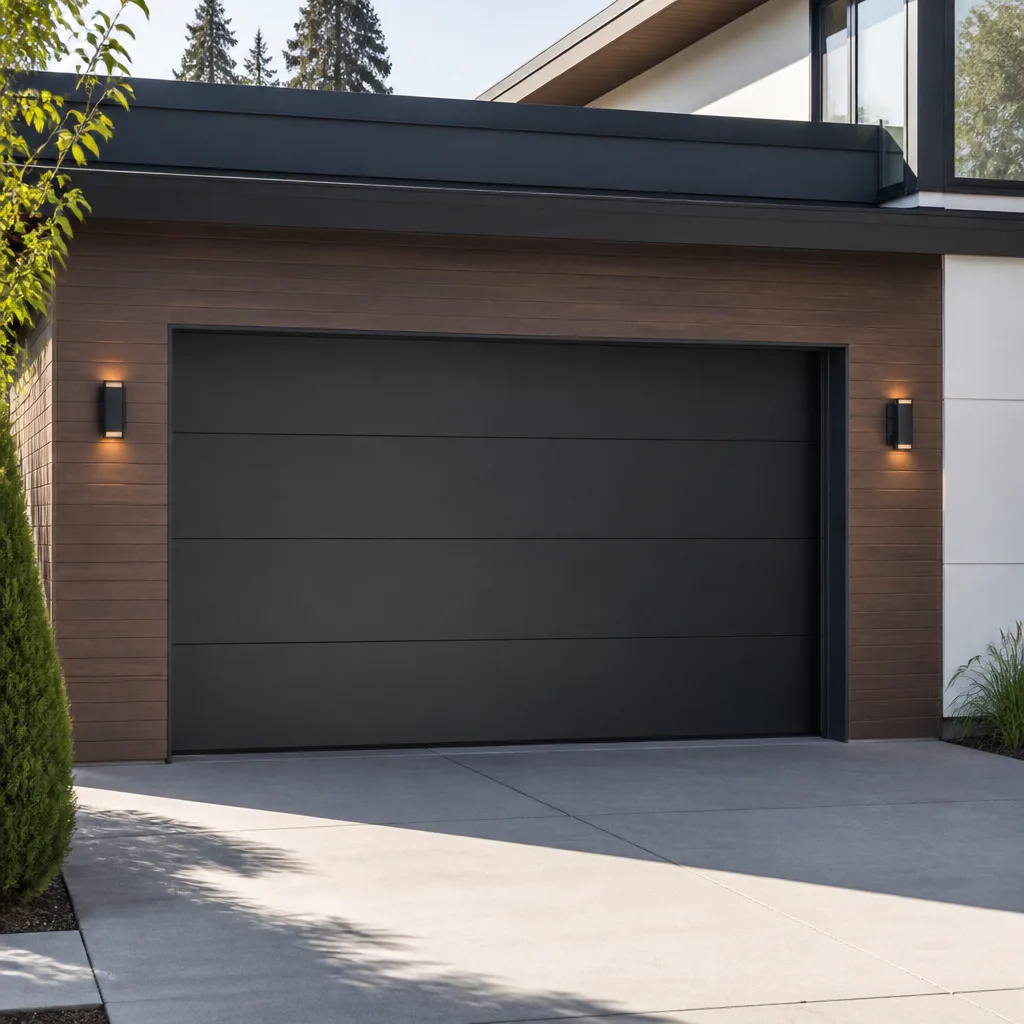 Modern flush
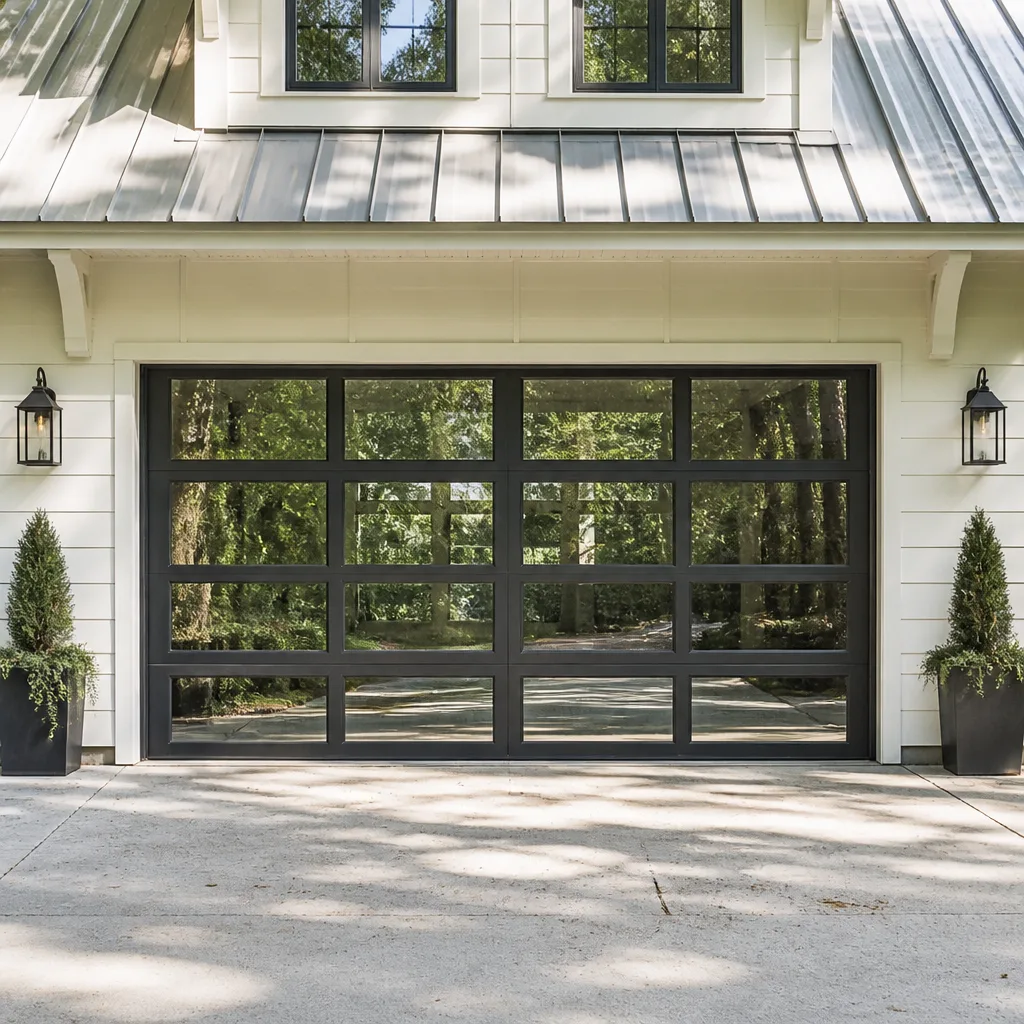 Full-view glass
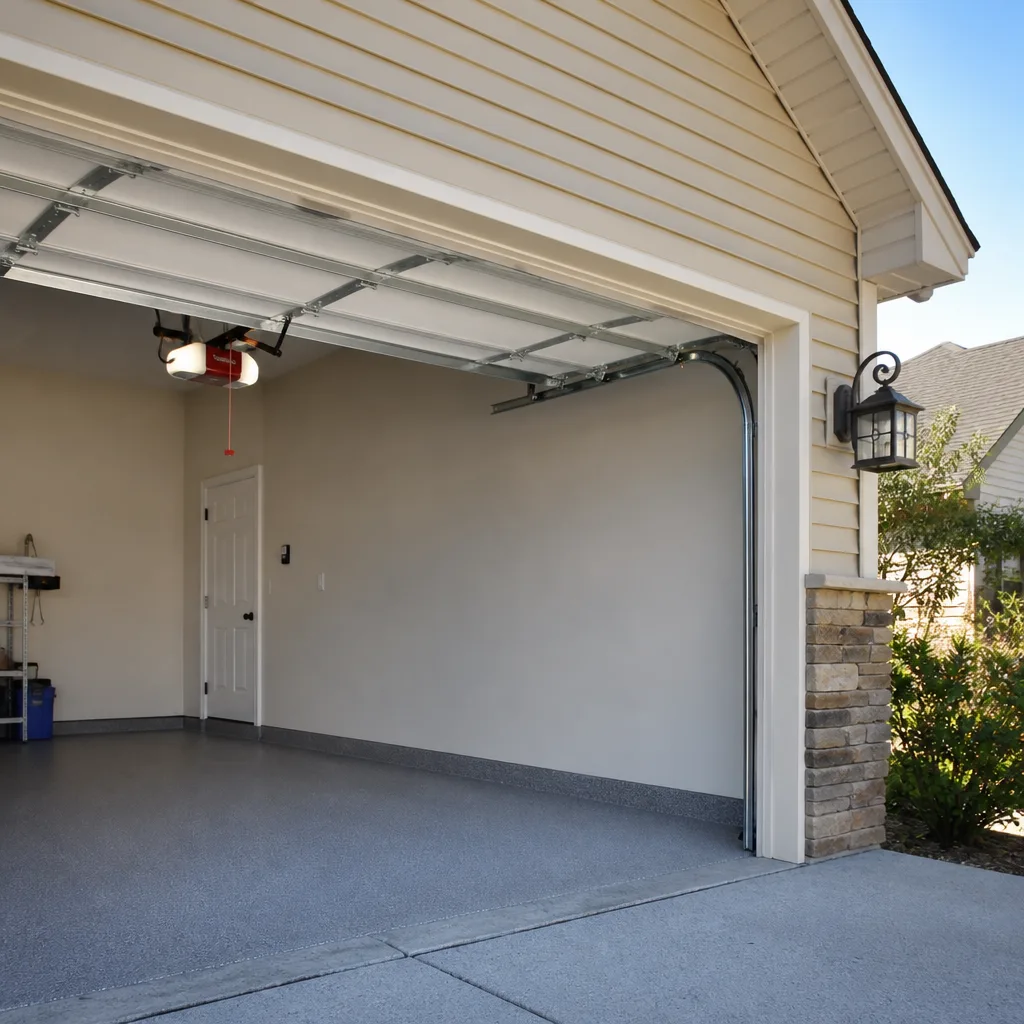 LiftMaster openers
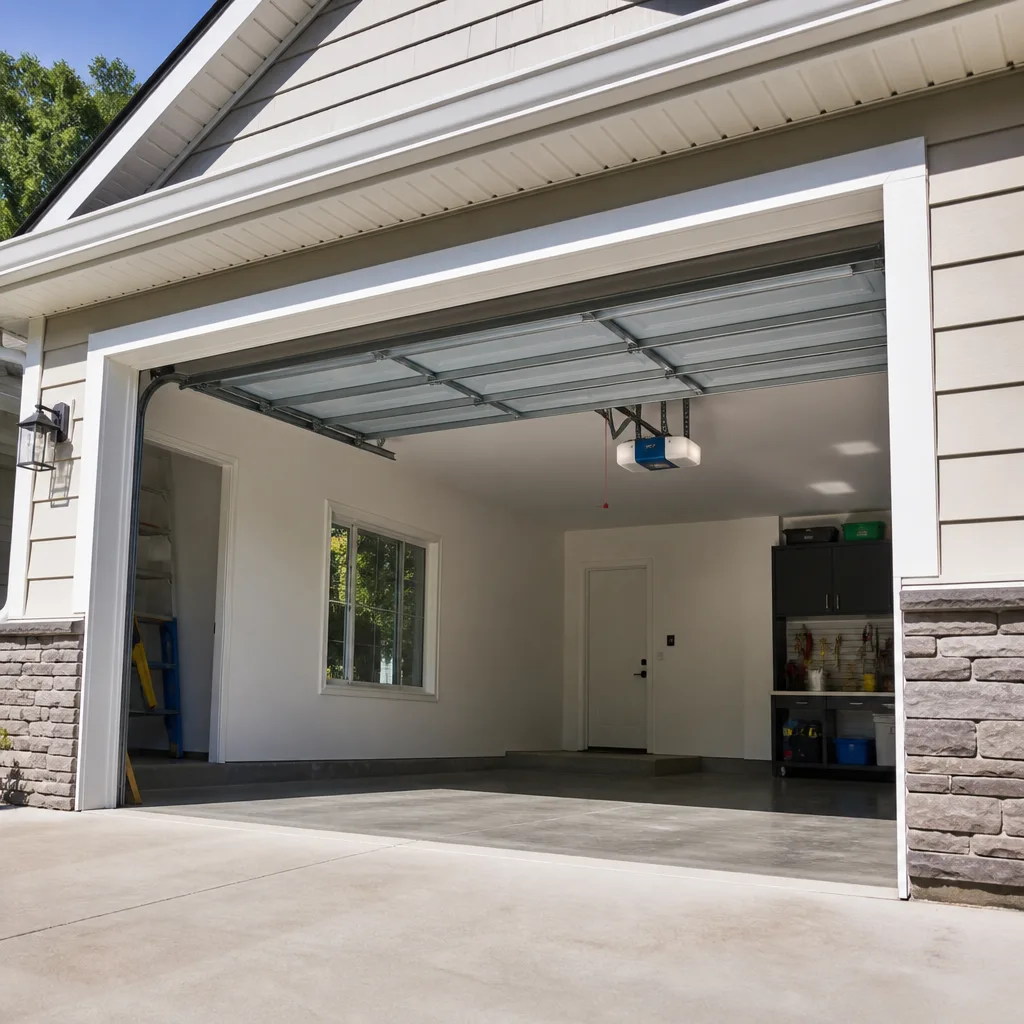 Chamberlain openers
Full 25-point door and opener safety check with every visit - springs, cables, rollers, tracks, and your LiftMaster or Chamberlain opener included
You get a price before we start. It does not change when the truck arrives.
Get your free estimateSeasonal Garage Door Care for Upland: Year-Round Homeowner’s Guide
Santa Ana wind events, which Upland experiences regularly from late September through March, create negative pressure differentials that pull garage door panels outward at the center. Over just two or three wind seasons, that repeated flexing quietly weakens bottom bracket attachments and hinge pins in ways most homeowners never notice until a panel kinks or a door comes off its track. This complete guide to garage door in Upland maps actual seasonal stress points: heat waves that test opener circuit boards, wind events that work hardware loose, winter moisture that swells weatherstripping, and a spring coil fatigue season that catches people off guard every year.
Styles & brands we work with
- Raised-panel steel
- Carriage house
- Modern flush
- Full-view glass
- LiftMaster openers
- Chamberlain openers
Quick Answer
Seasonal garage door care in Upland means scheduling maintenance around four local weather patterns rather than calendar dates: pre-Santa Ana wind inspections in fall, cold-morning lubrication checks in winter, coil and spring tension reviews in early spring, and heat-management tests for openers before summer temperatures climb past 100°F. Most homeowners can handle visual inspections and basic lubrication themselves, but spring replacement, track realignment, and opener circuit board work require a trained technician with the right tools and parts on hand – see our complete garage door repair guide for Upland homeowners for what to watch for.
Table of Contents
- Why Upland’s Climate Demands a Different Maintenance Calendar
- Santa Ana Wind Season: Pre-Event and Post-Event Checklists
- Summer Heat Protocol: Openers, Lubrication, and Hardware Expansion
- Winter Moisture and Cold-Morning Adjustments
- Spring Coil Fatigue: Why March and April Bring Failures
- The 10-Minute Monthly Visual Inspection
- Lubrication: What to Use, What to Skip, and Where It Goes
- Common Mistakes to Avoid
- When to Call a Professional
- Frequently Asked Questions
- The Bottom Line
Why Upland’s Climate Demands a Different Maintenance Calendar
Upland sits at roughly 1,200 feet elevation against the San Gabriel foothills, which means our temperature swings are wider than what coastal cities experience. A summer afternoon can hit 105°F, then a December morning drops into the high 30s. That 60-degree seasonal spread puts real stress on every moving part in a garage door system: metal contracts and expands, lubricants change viscosity, and opener electronics operate outside their ideal temperature range. Most generic maintenance guides assume four even seasons with predictable transitions. Upland doesn’t work that way. We get long stretches of dry heat, sudden wind events, and short but damp winter periods, often within the same month.
What matters for your door is not the date on the calendar, but what the weather is actually doing to the components. A torsion spring rated for 10,000 cycles will fail earlier in Upland than in a mild coastal climate because heat accelerates metal fatigue and cold mornings add extra load when lubrication is thick and sluggish. The good news: targeted attention four to six times per year, aligned to local weather patterns, prevents most of the failures we see on service calls. Let’s walk through each weather window and what to do during it. We’ll frame everything around what we’ve seen working on doors across Upland, from the older track homes near downtown to newer builds up in the Colonies and San Antonio Heights.
Santa Ana Wind Season: Pre-Event and Post-Event Checklists
Santa Ana winds peak in Upland between October and February, with gusts that routinely hit 40 to 60 mph along the foothill corridor. These aren’t just a nuisance for patio furniture. Sustained wind against a 7-foot-tall garage door exerts significant lateral pressure, and the negative pressure on the leeward side of the house pulls the door panels outward. Over time, this weakens the bottom bracket bolts, loosens hinge screws, and can fatigue the vertical track fasteners. We’ve replaced bottom brackets on doors in Upland that looked fine from the outside but had oval-shaped bolt holes from years of wind flex.
Pre-Wind Checklist: What to Do Before a Santa Ana Event
- Inspect bottom brackets. Open the door fully and look at the bottom corners where the cables attach. Check for gaps between the bracket and the door face, rust around bolts, or wallowed-out holes. If you can wiggle a bracket by hand, it’s already loose enough to be a problem.
- Tighten hinge screws. A 7/16-inch socket and a few minutes will firm up the hinge plates that connect each panel. Check both sides of every hinge, especially the center hinges where wind pressure concentrates.
- Test the balance. Disconnect the opener (pull the red release handle) and manually lift the door to waist height. It should stay put. If it drops, the springs are losing tension and need attention before they snap under wind load.
- Clear the tracks. Blow out or wipe down both vertical tracks. Grit and debris in the track make the rollers work harder, and wind-driven sand is common during Santa Ana events in Upland.
- Lubricate rollers and hinges. A quick shot of garage door lubricant on each roller bearing and hinge pin reduces friction and lets the door move cleanly when it’s fighting wind gusts.
Post-Wind Checklist: What to Inspect After the Gusts Die Down
- Re-check bottom brackets. This is the most common failure point we see after wind events. Look for fresh movement, cracked paint around bolt heads, or a door that seems to sag on one side.
- Run a full open-and-close cycle. Stand to the side and watch the door move. Listen for grinding, popping, or a change in the normal operating sound. Any new noise means something shifted.
- Check the top panel. Wind flex can crack or slightly bow the uppermost panel, which carries the most wind load when the door is partially open during a storm.
- Test the auto-reverse sensors. Dust and wind-blown debris can knock the photo eyes out of alignment. Place a 2×4 or rolled-up towel in the door’s path and close it. The door should reverse within two seconds of contact. If it doesn’t, address the sensor issue immediately.
Most Santa Ana damage to garage doors accumulates gradually rather than failing in a single storm. That’s why pre-event and post-event checks matter: you catch the small looseness before it becomes a snapped cable or a panel kink. If anything in either checklist feels uncertain or you notice movement you can’t explain, call us for a hands-on inspection. We service all major door brands in Upland, from Clopay and Amarr to Wayne Dalton and Raynor, and we’ll tell you exactly what needs fixing and what can wait. Not sure which brand is right for your home? Read our guide on choosing the right garage door brand: a buyer’s guide for Upland.
Summer Heat Protocol: Openers, Lubrication, and Hardware Expansion
Upland summers regularly produce stretches of 100°F-plus days, and your garage interior runs 15 to 20 degrees hotter than the outside air. That heat does three things to a garage door system: it stresses opener circuit boards, it thins out lubrication, and it causes metal components to expand. None of these are instant failures, but each one shortens the life of the system when ignored.
Opener Circuit Boards and Battery Backups
The logic board inside your garage door opener is rated for a certain operating temperature range, typically up to about 120°F ambient. In an Upland garage during a July heat wave, the air near the ceiling, where the opener motor hangs, can reach 130°F or more. When a circuit board runs hot, capacitors degrade faster and solder joints can eventually fail. The symptoms are usually intermittent: the opener works in the morning but not in the mid-afternoon, or it runs fine for weeks and then randomly refuses to respond to the remote. If you have a LiftMaster or Chamberlain opener with a battery backup, that sealed lead-acid battery also ages faster in sustained heat, so if you’ve had one for three or more years in a hot garage, its runtime during a power outage may be shorter than you expect.
What you can do: keep the garage ventilated when practical, especially during the hottest part of the day. If you have a side door or a ventilation window, cracking it during late afternoon heat helps. But don’t spray water or place a fan directly on the opener motor, as that introduces moisture and dust where they don’t belong. If your opener starts showing heat-related intermittent behavior, the fix may be a board replacement or a new opener, depending on age and brand. We work on Genie, Craftsman, LiftMaster, and Chamberlain openers across Upland and can diagnose the difference between a heat issue and a failing logic board in one visit.
Lubrication Viscosity in High Heat
Garage door lubricants behave differently in extreme heat. Thin lubricants run off quickly in a hot garage, leaving rollers and hinges dry by mid-summer. That’s when you hear squeaking that gets worse in the afternoon. Use a garage-door-specific lubricant (spray lithium or a brand formulated for door hardware), not WD-40, which is a solvent that strips existing lubrication. In Upland’s summer, plan to re-lubricate rollers and hinges every three months instead of the typical six. The heat simply doesn’t let the lubricant stay in place as long.
Hardware Expansion and Track Alignment
Steel expands when it’s hot. On a 16-foot-wide door, that expansion is measurable and can cause the door to ride slightly differently in the track on a 105°F afternoon than on a 65°F morning. If your tracks are marginal to begin with, that expansion can push a door into binding. If you notice the door hesitating or scraping only during the hottest part of the day, the tracks may need adjustment or the brackets may need repositioning. That’s a job for a technician with the right tools, and it’s one of the more common repair calls we handle in Upland during July and August.
Winter Moisture and Cold-Morning Adjustments
Upland’s winter is mild compared to the mountains, but it brings two seasonal factors that affect garage doors: overnight temperatures that dip into the 30s and intermittent rain that pushes moisture into weatherstripping, seals, and exposed hardware. Neither is dramatic, but both create specific wear patterns that are easy to miss until something binds or leaks.
What Contracts in the Cold
Metal door tracks and steel springs contract in cold temperatures. On mornings in the high 30s, a door that runs smoothly all afternoon can feel slightly stiffer on the first cycle of the day. That’s normal, up to a point. The springs are also stiffer when cold, and the opener motor works harder against both effects. What’s not normal is a door that sticks, grinds, or refuses to open on a cold morning. Those symptoms suggest the tracks have shifted, the springs are under-tensioned, or the opener’s force settings are marginal. Force settings matter in winter: an opener that’s set too high can damage the door and an opener that’s set too low will reverse mid-cycle when the cold adds resistance.
Moisture and Weatherstripping
Rain and morning condensation soak into the bottom rubber seal and the side weatherstripping along the jamb. When temperatures drop below freezing, which does happen a few nights a year in Upland, that moisture can freeze the door to the concrete floor. The opener will strain, the door may bow slightly, and in the worst case, the bottom panel can separate from its bracket. Before a cold snap, check that the bottom seal isn’t cracked or torn and that water isn’t pooling at the base of the door. If the seal is worn, replacing it is a 30-minute job with the right part in hand, and it prevents most freeze-stick issues. We keep bottom seals in stock for all the major door brands we service, from Wayne Dalton and Clopay to Amarr and Raynor, so if you’re in Upland and your seal is showing its age, call us and we’ll swap it before the next cold front.
Winter is also the season when lubricant thickens. A heavier, gel-style lubricant that’s perfect in summer can turn syrupy in the cold and make the door feel sluggish. We recommend a lighter spray lubricant for winter use in Upland, applied sparingly to rollers and hinges after you’ve cleaned off any summer buildup.
Spring Coil Fatigue: Why March and April Bring Failures
Here’s a pattern we see every year in Upland: the first warm weeks of spring bring a noticeable spike in torsion spring failures. There’s a mechanical reason for it. Through winter, springs are cycled in the cold, which keeps them stiffer and slightly more brittle. Then the first 85°F days of March and April arrive, the metal expands and relaxes, and any micro-fractures that developed over the winter finally propagate. A spring that survived all winter snaps on a warm Tuesday afternoon in March. If you’ve lived in Upland for more than a few years, you’ve probably heard that distinct bang from your own garage or a neighbor’s, and the aftermath is always the same: the door won’t lift and one spring is hanging in two pieces.
How to Get Ahead of Spring Coil Fatigue
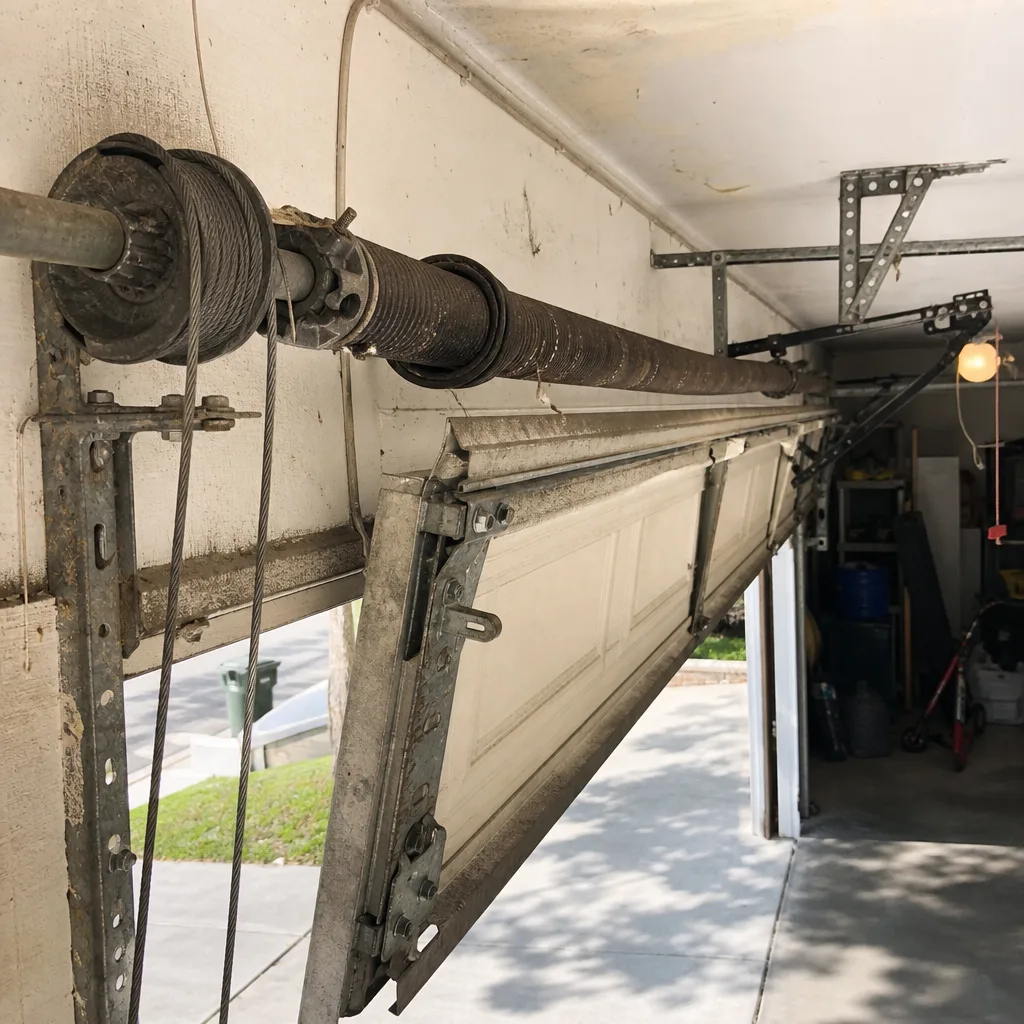
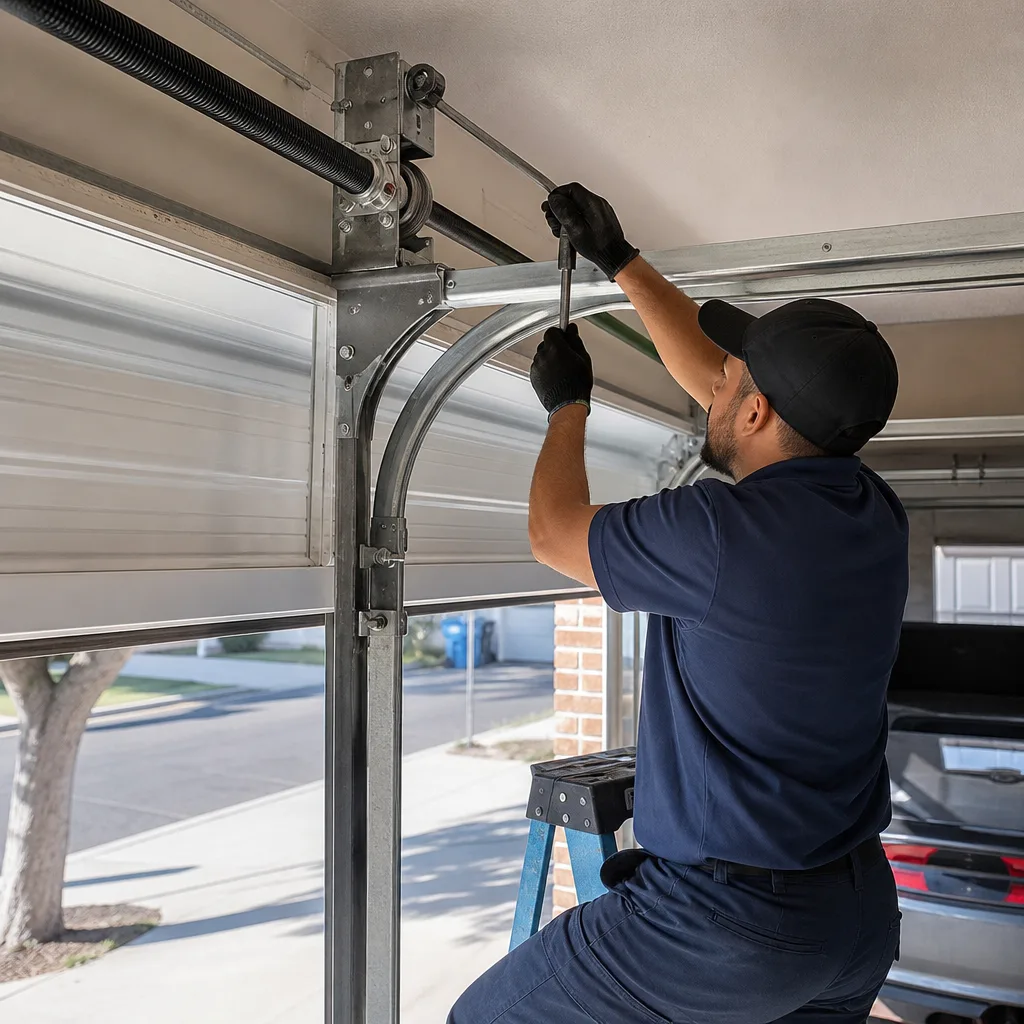
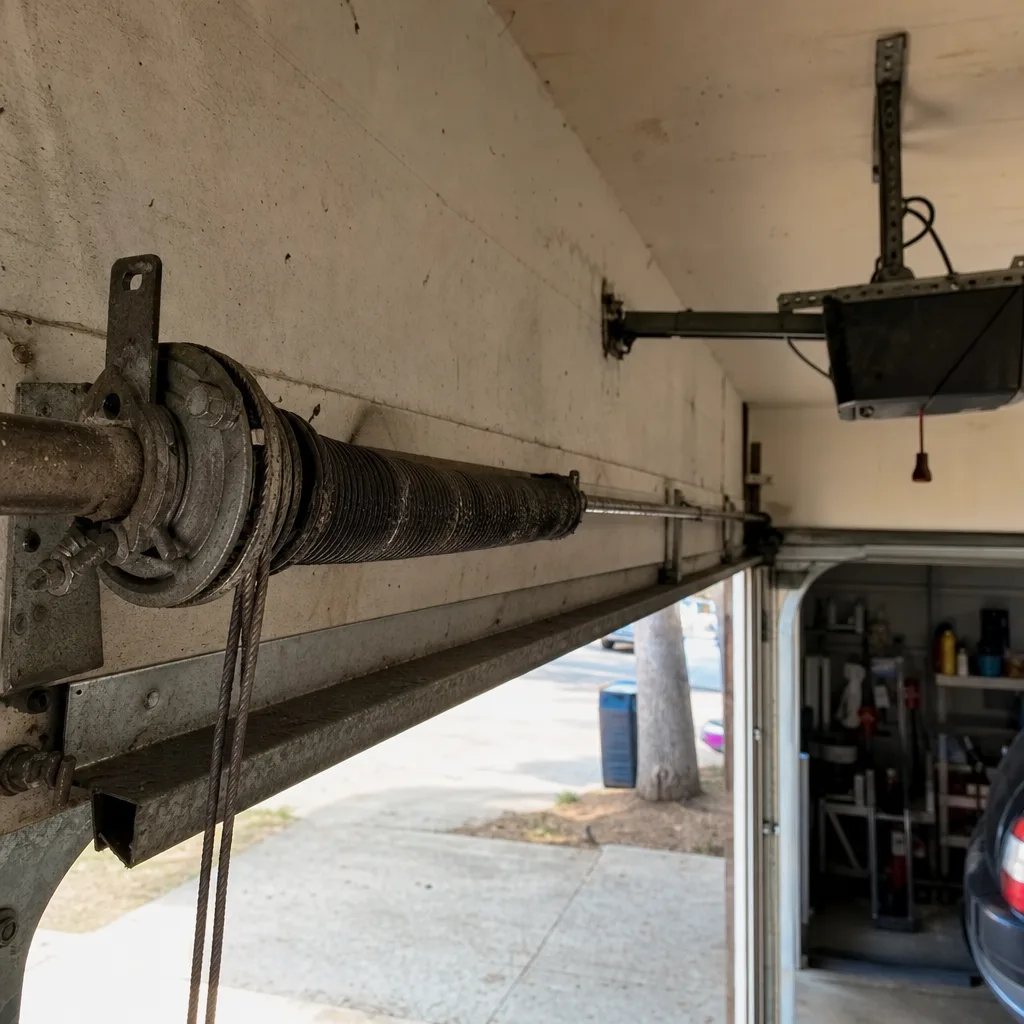
- Look for visible separation. Open the door and inspect the torsion springs mounted on the bar above the door. A healthy spring has tight, even coils. If you can see gaps between coils or the spring looks stretched in one section, it’s nearing the end of its life.
- Listen for popping sounds. If you hear occasional pops when the door moves, that’s the spring binding and releasing on itself. It won’t get better on its own.
- Count the cycles. Standard springs are typically rated for 10,000 cycles, which translates to roughly seven to ten years of normal use for a single-car door. If your door is older than that and the springs are original, you’re on borrowed time.
- Schedule a spring replacement on your terms. Replacing a spring before it breaks is significantly cheaper and safer than dealing with an emergency repair, and it doesn’t strand your car in the driveway on a morning you need to be somewhere.
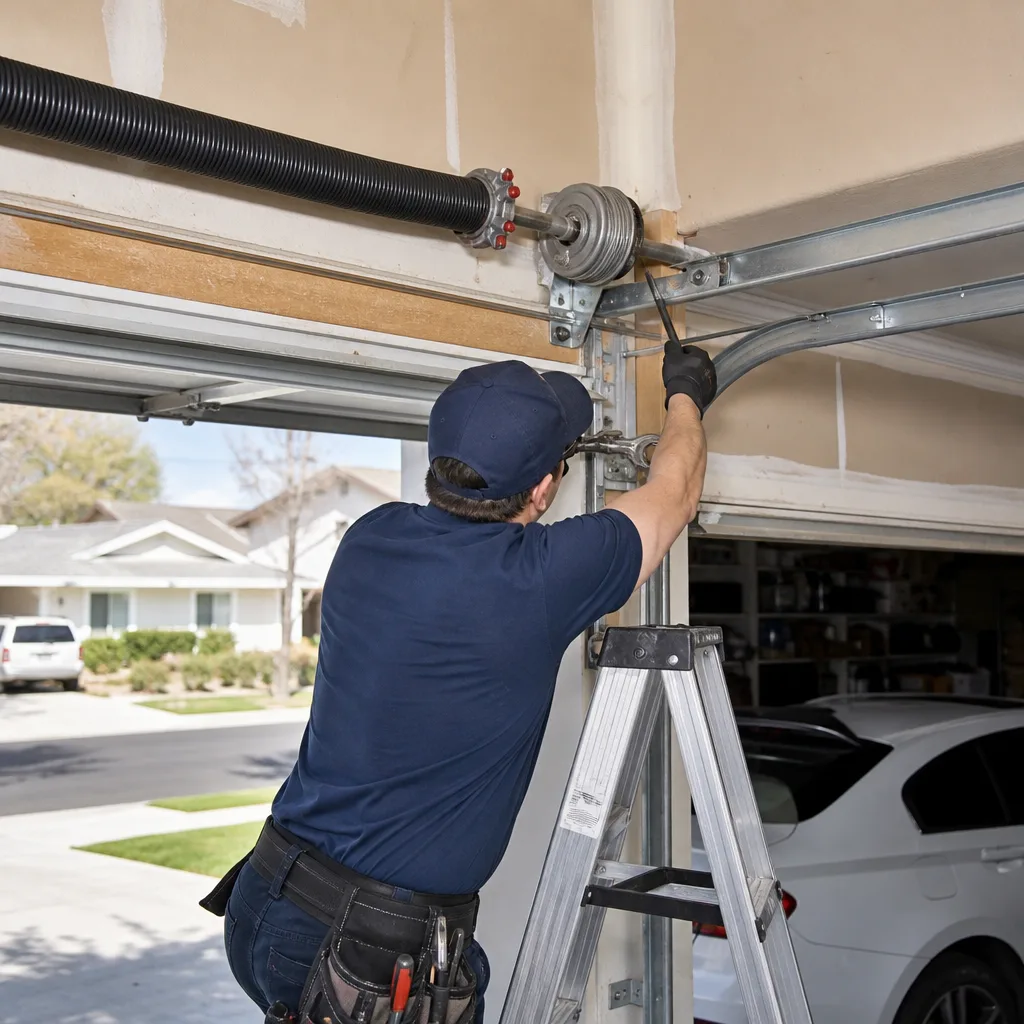
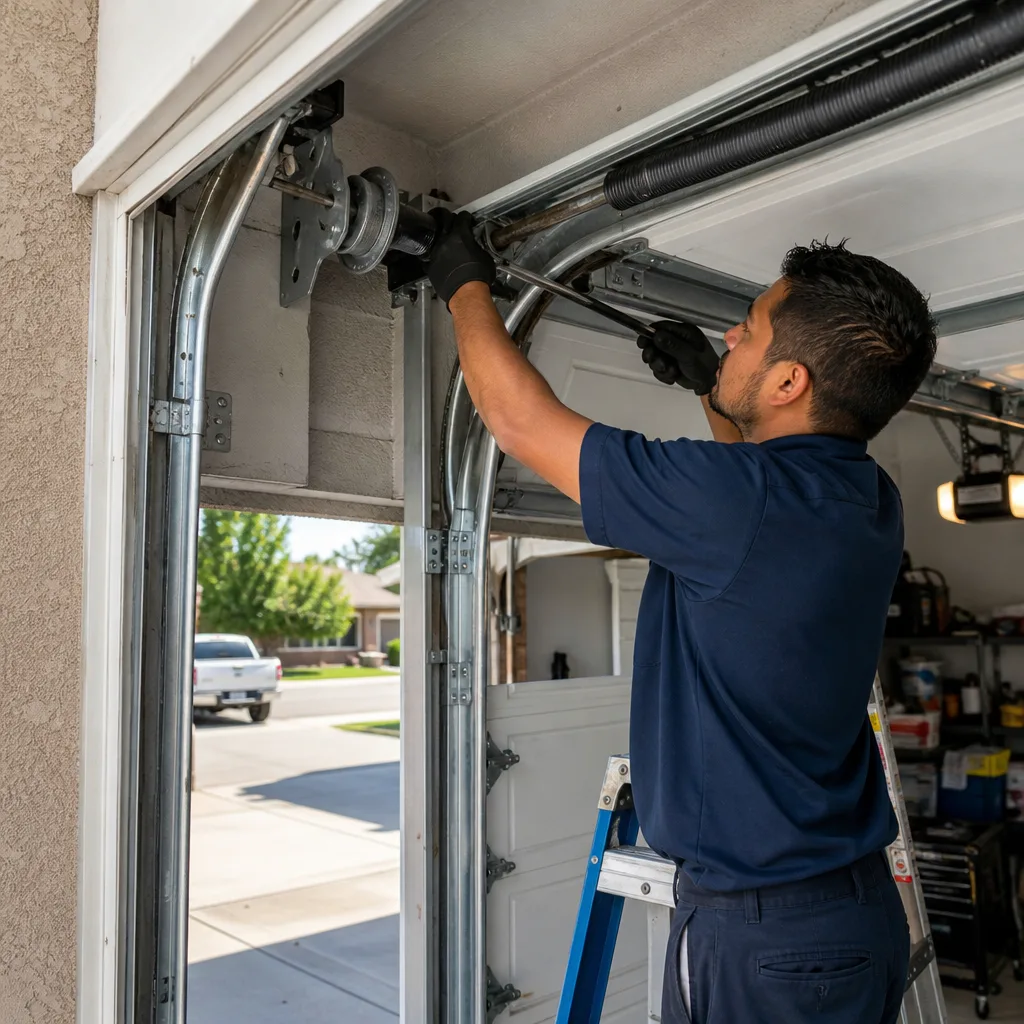
One thing we want to be direct about: torsion spring replacement is not a DIY job. These springs are under several hundred pounds of tension, and when one lets go, the release of that energy can cause serious injury. The tools required and the technique involved are specific, and doing it wrong damages the door, the cables, and potentially you. We handle spring replacements in Upland regularly, and we always recommend a trained professional take this one on. The job itself is usually under an hour once we’re on site, and we’ll check the cables, drums, and bearing plates while we’re in there, because a spring that failed usually stressed other parts too.
For more detail on what spring failure looks like and what a replacement involves, take a look at our Garage Door Repair in Upland page. It covers spring replacement along with the other common repair scenarios we handle.
The 10-Minute Monthly Visual Inspection
A consistent monthly walkaround catches more problems than any seasonal deep-clean. The goal is to notice changes: new rust, a gap that wasn’t there before, a sound that’s developing. You don’t need tools for most of this, just a pair of eyes and a habit.
What to Look At Every Month
- Bottom seal. Look for cracks, tears, or sections that have pulled away from the door. A damaged bottom seal lets rain, dust, and pests into the garage and increases your heating and cooling costs.
- Bottom brackets and cable attachments. These carry the door’s full weight when it moves. Check for rust, loose bolts, or cable fraying where the cable wraps around the drum. Frayed cables are a failure waiting to happen.
- Hinges and rollers. Look for bent hinge plates, loose screws, or rollers that wobble in the track. Nylon rollers wear down over time and should be replaced every five to seven years.
- Track alignment. Both vertical tracks should be straight and parallel, and the horizontal tracks should align smoothly with the curve. A gap or a slight bend means the door will bind sooner or later.
- Belt or chain tension. For belt-drive openers, the belt should be taut but not tight enough to twang. For chain-drive openers, the chain should have about half an inch of flex. A sagging belt or chain is a sign of a worn sprocket or a loose tensioner.
- Safety sensor alignment. Both photo eyes should have steady indicator lights. A flickering or dark sensor means misalignment or a wiring problem, and the opener will refuse to close.
Ten minutes a month. That’s the whole commitment. Most people can do this inspection in the time it takes the coffee maker to finish, and the payoff is catching a $40 hinge replacement before it becomes a $400 track repair. If you’re not confident about what you’re looking at, or you spot something that doesn’t look right, call us and we’ll walk through it with you. We’d rather tell you it’s nothing than have you ignore something that later fails.
Lubrication: What to Use, What to Skip, and Where It Goes
Lubrication is the cheapest and most effective maintenance you can do to extend the life of your garage door, but only if you use the right product in the right places. Most garage door noise complaints we hear in Upland trace back to dry rollers or hinges that were never lubricated or were lubricated with the wrong spray. Here’s the straightforward version, based on what we’ve learned servicing doors across every brand in the area.
What to Use
- Garage-door-specific spray lubricant. Look for a product labeled for garage doors or overhead doors. These are typically spray lithium or silicone blends formulated to cling to metal without attracting dust. Brands like 3-IN-ONE Garage Door Lube and Blaster Garage Door Lubricant are widely available and work well.
- White lithium grease. Good for hinges and springs, though the spray version is easier to apply precisely. Grease in a tube is harder to control and makes a mess on the door face.
What to Skip
- WD-40. It’s a solvent and penetrant, not a lubricant. It cleans off what little lubrication is there and then evaporates, leaving the metal drier than before. Never use WD-40 on rollers, hinges, or springs.
- Motor oil. It’s too heavy, it attracts dirt, and it drips onto the door and the garage floor.
- Grease on the track itself. The track doesn’t need lubrication. The rollers roll on bearings, not on the track, and greasing the track just collects grit that grinds the rollers down faster.
Where It Goes
- Roller bearings. One quick shot at the base of each roller, where the shaft meets the wheel. Do all rollers on both sides.
- Hinge pins. A small amount on each pivot point. Wipe away excess that squeezes out.
- Torsion springs. Spray lightly along the length of the spring while the door is closed. Don’t oversaturate; you just need a thin film.
- Bearing plates. The brackets at both ends of the torsion bar have bearings. A shot at each end reduces friction and extends the life of the spring system.
- Lock mechanism. If your door has a manual slide lock, a light shot keeps it working smoothly.
In Upland’s summer heat, plan to reapply every three months. In winter, every four to six months is usually sufficient. If you hear the door getting louder as the afternoon heats up, that’s your cue to re-lubricate sooner.
Common Mistakes to Avoid
- Treating the garage door as zero-maintenance. Many homeowners in Upland never touch their garage door until it stops working. By then, the repair is almost always more expensive than the maintenance that would have prevented it. A monthly visual check and quarterly lubrication cost almost nothing and add years to the system.
- Using WD-40 instead of a proper lubricant. We covered this above, but it bears repeating. WD-40 is the most common misused product we see on garage doors in Upland, and it actively makes the problem worse by stripping existing lubrication.
- Ignoring a noisy door until it stops working. Noise is diagnostic information. A squeal means dry bearings. A grinding means metal-on-metal contact. A popping means a spring binding. Fixing the noise early costs a fraction of what fixing the failure costs, and the noise itself tells you where to look.
- Replacing a spring on your own. Torsion spring replacement is one of the most dangerous DIY projects in the home improvement world. The spring is under extreme tension, and if the winding bar slips, the energy release can maim or kill. This is one area where “I’ll figure it out” is never worth the risk.
- Forcing a door that’s binding. If the door won’t move or is moving unevenly, holding down the opener button and praying won’t fix it. You’ll burn out the motor, strip the gear, or bend the track. Stop, disconnect the opener, and get a professional look at what’s binding.
- Lubricating the track instead of the rollers. Greasing the track is a persistent home remedy that makes the problem worse. The track needs to be clean, not slippery. Keep the lubricant on the bearings and hinges.
- Waiting until spring to think about springs. If your springs are nearing the end of their service life, installing replacements in November is smarter than gambling that they’ll survive the winter and spring. A planned replacement is predictable; an emergency repair is not.
When to Call a Professional
Some garage door work is genuinely DIY-appropriate: lubrication, visual inspections, tightening accessible screws, clearing debris from the tracks. Other work is not, and knowing the difference saves you money, time, and in the worst case, a serious injury. Call a professional when you have a broken or visibly stretched torsion spring, a frayed cable, a door that’s come off its track, a bent or kinked panel, or an opener that’s showing intermittent electrical behavior you can’t explain. These are not conditions that resolve themselves, and they all involve stored energy or moving parts that can cause real harm if mishandled. Garage Door Repair in Upland covers the full range of spring, cable, track, and panel repairs we handle. Garage Door Opener Repair in Upland is your resource when the motor, logic board, or safety sensors are acting up. Both are handled by the same team, so you’re not getting handed off to a subcontractor.
Garage Door Service Upland offers free estimates in Upland. Call (855) 970-2962 and we’ll come out, diagnose the issue, and give you a written price before any work begins. If a targeted repair will fix the problem, that’s what we recommend. If your door or opener has reached the point where replacement is the more cost-effective path, we’ll explain why and show you options from Clopay, Amarr, Wayne Dalton, and Raynor, along with openers from LiftMaster, Chamberlain, Genie, and Craftsman. If you’re at the point of needing a full Garage Door Installation in Upland, you’ll get a straight recommendation on what fits your budget and your door’s usage, with no upsell pressure.
Frequently Asked Questions
In Upland’s climate, lubricate your rollers, hinges, and springs every three months during the summer heat and every four to six months during the cooler parts of the year. The heat thins out lubrication faster, so more frequent application keeps the door running quietly. Use a garage-door-specific spray lubricant, not WD-40. If you hear the door getting louder as the day heats up, re-lubricate sooner. Call (855) 970-2962 if you want a professional lubrication and tune-up done for you, and we’ll also check every hinge, bracket, and bolt while we’re there.
Santa Ana wind pressure pushes against the face of the door, which transmits load through the hinges, brackets, and tracks. If the door already has loose hardware or marginal track alignment, that extra pressure makes the components shift enough to change the door’s sound. The fix starts with tightening all hinge and bracket fasteners and verifying that the tracks are correctly aligned. If the sound persists after tightening, there may be hidden bracket wear from previous wind seasons. We’re happy to inspect doors across Upland after wind events and pinpoint the source of the noise.
Yes, sustained heat above 100°F reduces the lifespan of opener circuit boards and battery backups. The air near the ceiling, where the opener motor hangs, runs hotter than the rest of the garage, and repeated heat exposure degrades capacitors and solder joints. Symptoms include intermittent remote failures and random non-response during the hottest part of the day. If your opener is showing heat-related issues, call (855) 970-2962 for a diagnosis. We service LiftMaster, Chamberlain, Genie, and Craftsman openers and can tell you whether a board replacement or a new unit makes more sense.
A full seasonal tune-up, including lubrication, hardware tightening, balance testing, and safety sensor verification, typically runs between $85 and $150 in the Upland area depending on the door’s condition and what needs adjustment. Parts like a worn bottom seal or a cracked roller add to the cost, but you’ll know the full price before any work starts. We quote everything upfront and nothing gets installed without your approval. Call (855) 970-2962 for an exact quote, estimates are free.
Standard torsion springs are rated for about 10,000 cycles, which works out to seven to ten years for most Upland homeowners, but the combination of summer heat and winter cold can shorten that timeline, especially if the door is used multiple times per day. Springs that are nearing the end of their life often show visible coil separation or make popping sounds when the door moves. If your springs are seven or more years old, proactive replacement avoids the emergency failure. We stock springs for doors from Clopay, Amarr, Wayne Dalton, and Raynor, and we can install the right one same-day in most cases after a short assessment visit.
Visual inspections, lubrication, tightening accessible hinge screws, and clearing debris from the tracks are all realistic DIY tasks that require no special tools. Spring replacement, cable replacement, track realignment, and opener repair are not DIY tasks, because the stored energy in the spring system and the weight of the door create real injury risk. We’re glad to handle the dangerous work and the fine adjustments, and you’re welcome to handle the monthly checks in between. If you ever feel uncertain about what you’re seeing, call us at (855) 970-2962 and we’ll help you decide whether a service call is warranted.
Not every year, but you should inspect the bottom seal and side weatherstripping monthly and replace them when they show cracks, tears, or separation from the door. In Upland’s dry climate, rubber seals become brittle over time, and once they crack, winter moisture and summer dust both find their way into the garage. A bottom seal that’s four or five years old and exposed to afternoon sun will usually need replacement sooner than one on a shaded north-facing door. We keep seals in stock for all the major brands and can install a new one quickly during a service call.
The Bottom Line
Garage doors in Upland work hard all year, but the stresses change with the weather. Santa Ana winds loosen hardware and load the panels. Summer heat cooks opener electronics and strips the lubrication. Winter cold stiffens springs and seizes wet seals. And early spring is when fatigued torsion springs finally let go. Aligning your maintenance to those four weather windows, plus a ten-minute monthly visual check, prevents most of the failures we see on service calls. For the work that needs a professional, Garage Door Service Upland handles repair, opener work, and full installation across Clopay, Amarr, Wayne Dalton, Raynor, LiftMaster, Chamberlain, Genie, and Craftsman systems. Back to our Garage Door Service Upland home page to see everything we cover, or call (855) 970-2962 for a free estimate in Upland.
Written by the team at Garage Door Service Upland, serving Upland since 2013. For more guides & resources, visit our blog.
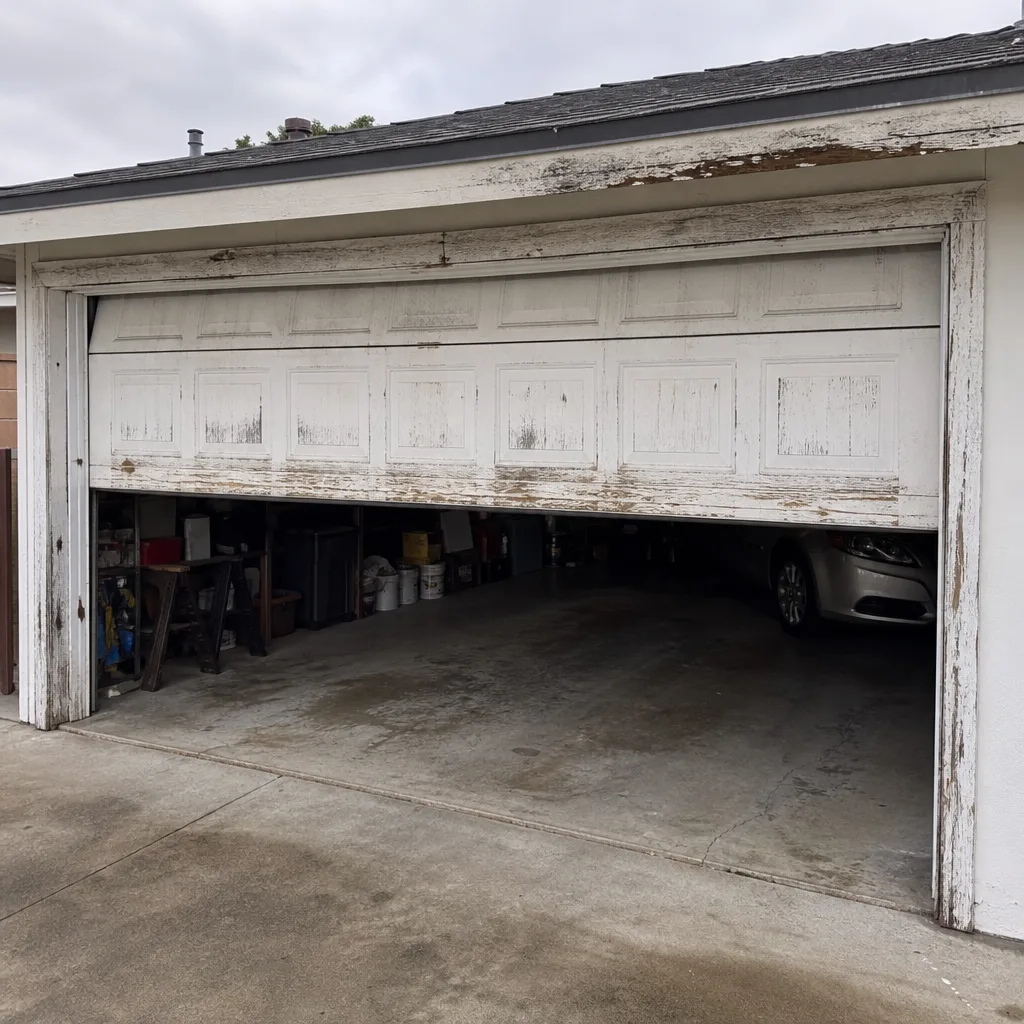
See the difference
 Before
 After
 Before
 After
 Before
 After