
Last updated November 2, 2026
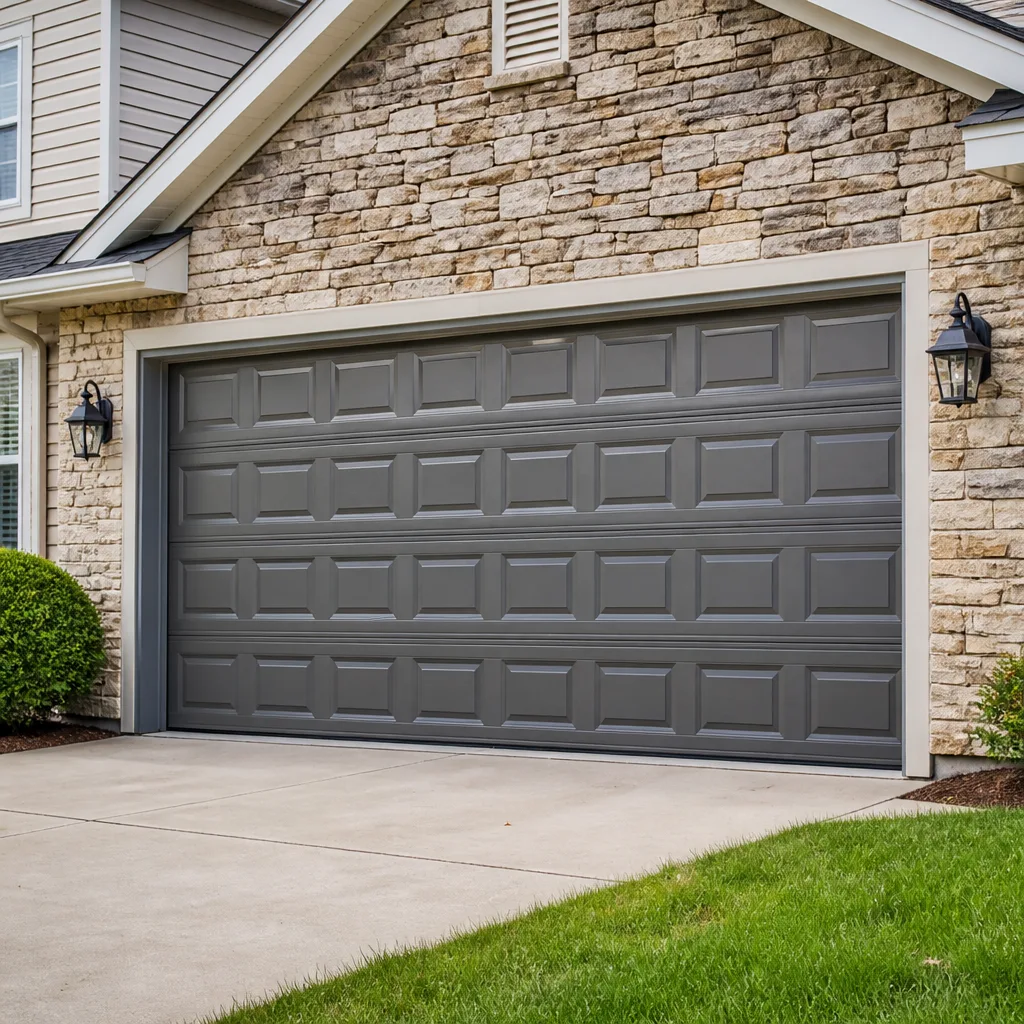 Raised-panel steel
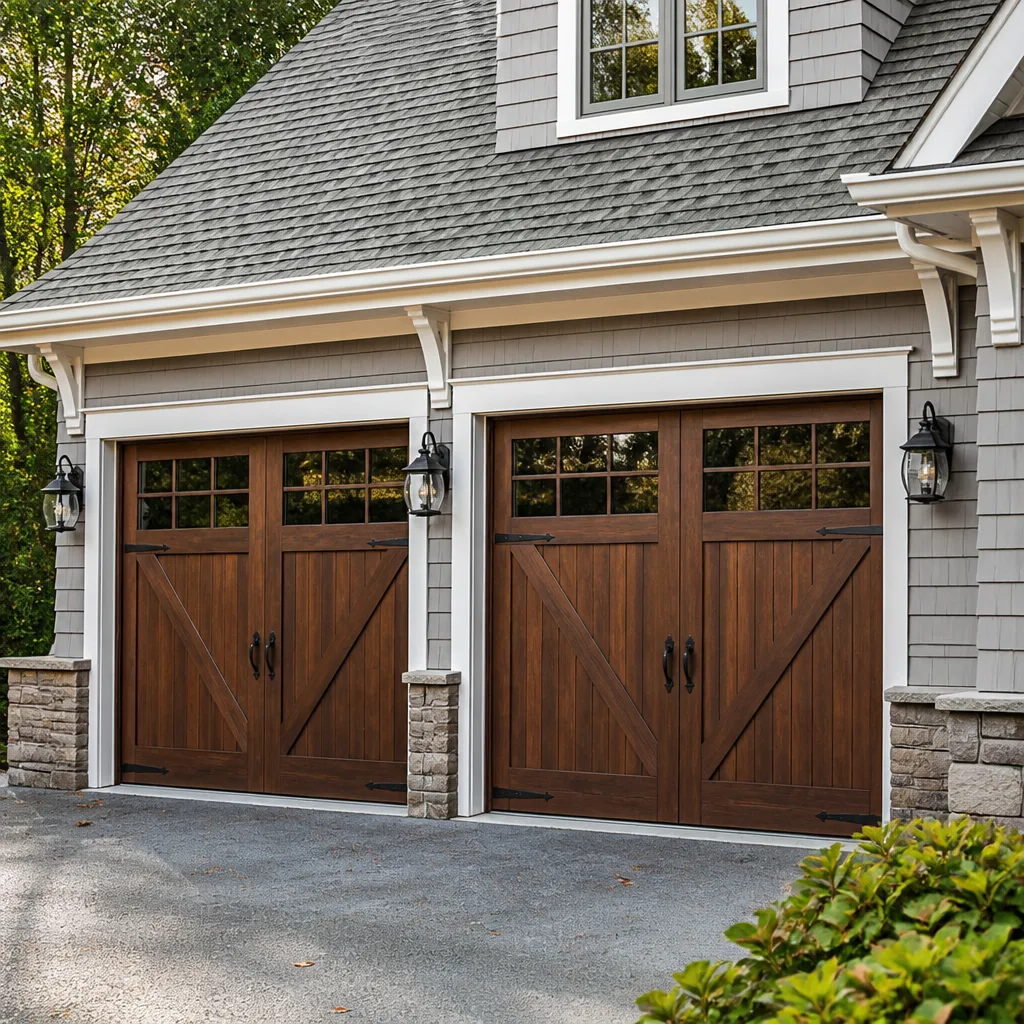 Carriage house
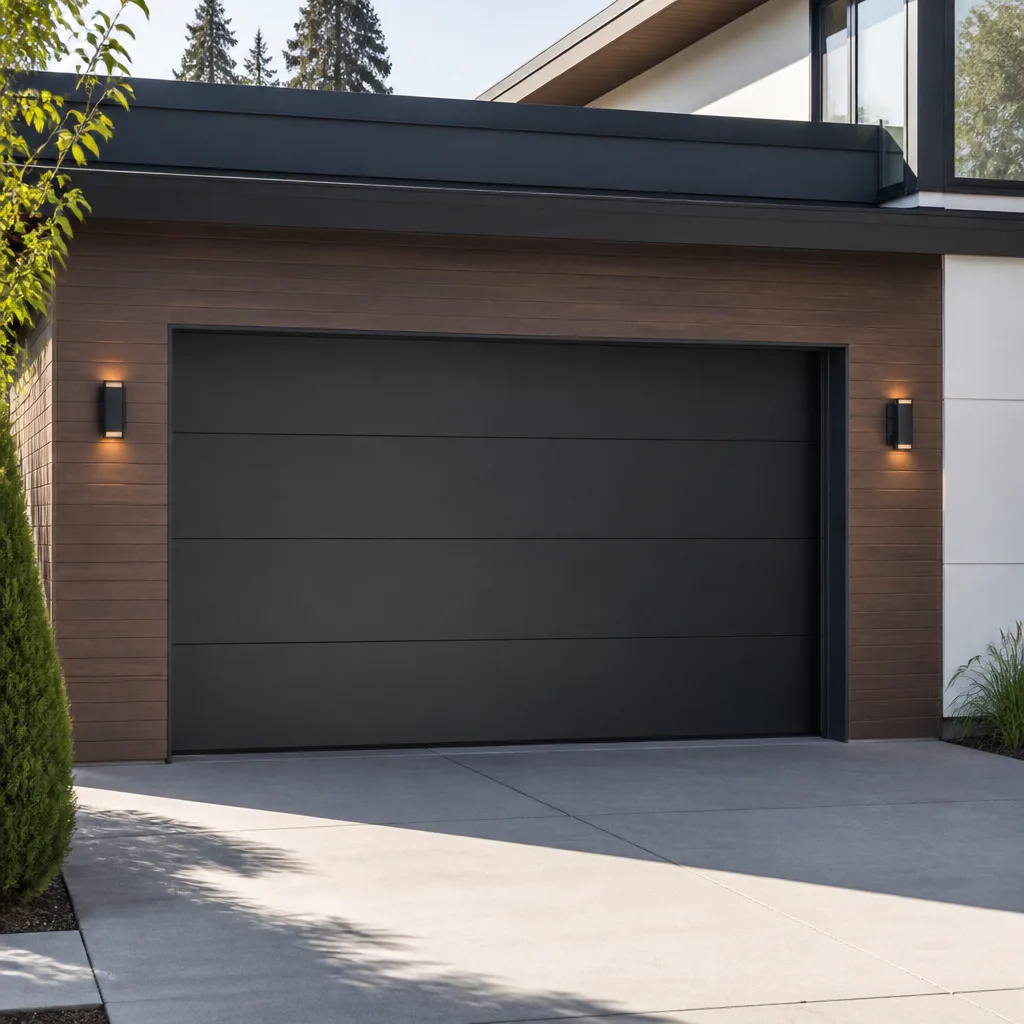 Modern flush
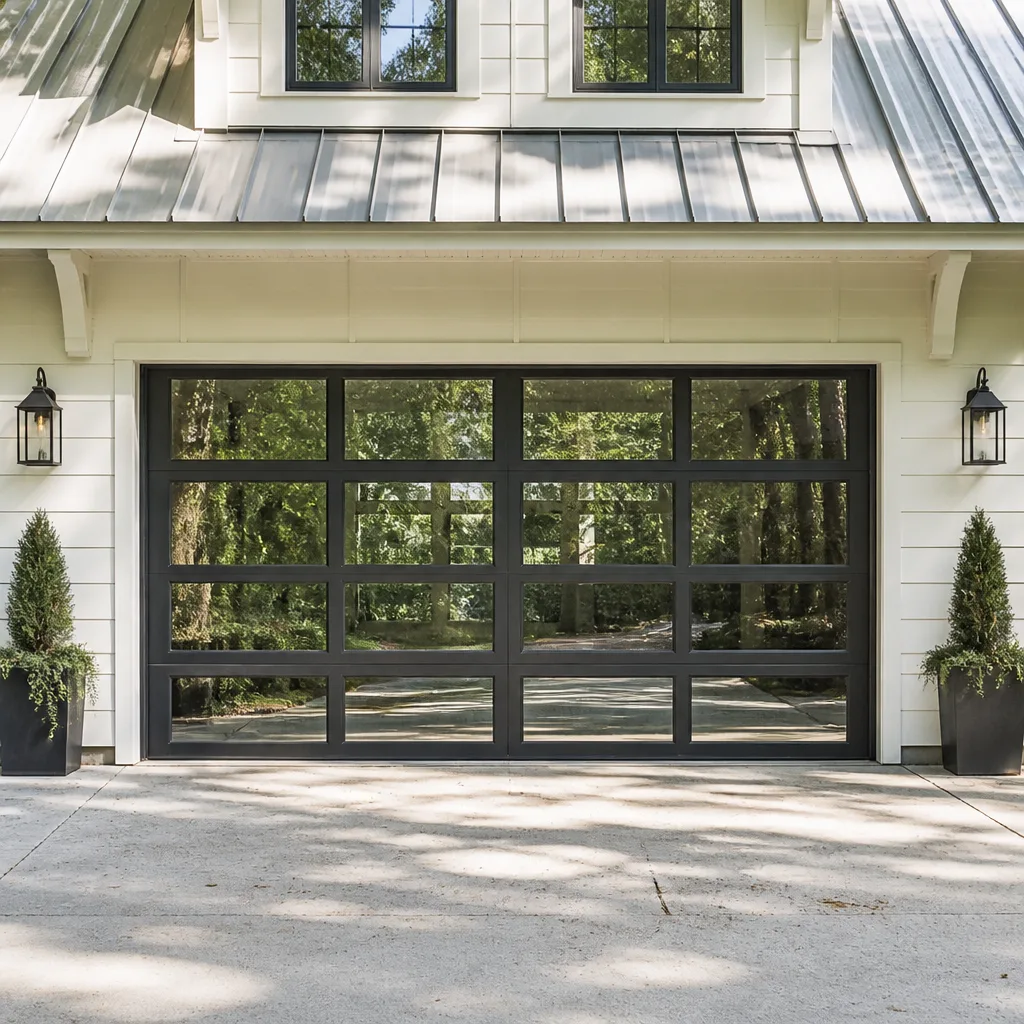 Full-view glass
 LiftMaster openers
 Chamberlain openers
Full 25-point door and opener safety check with every visit - springs, cables, rollers, tracks, and your LiftMaster or Chamberlain opener included
You get a price before we start. It does not change when the truck arrives.
Get your free estimateGarage Door Warning Signs: An Upland Homeowner’s Reference Guide
A garage door that takes two seconds longer to open than it used to isn’t slow. It’s telling you the motor is working harder than it should, which typically means a spring or cable is losing tension and compensating load is being transferred to the opener. What happens next is predictable: the opener burns out, the spring snaps, or the cable lets go, usually at the worst possible moment. This guide maps every warning sign to the specific component failing, the window of time you have before it becomes an emergency, and what an Upland homeowner should actually do about it. For a deeper dive into prevention, see our Seasonal Garage Door Care for Upland: Year-Round Homeowner’s Guide. We see these failures every week in Upland, and the pattern is always the same: the signs were there for months before the breakdown.
Styles & brands we work with
- Raised-panel steel
- Carriage house
- Modern flush
- Full-view glass
- LiftMaster openers
- Chamberlain openers
Quick Answer
The most common garage door warning signs in Upland are a door that opens slower than it used to, a grinding or squealing noise during operation, the door appearing crooked or uneven when moving, visible cable fraying near the bottom roller brackets, and the door reversing before fully closing. Each of these points to a specific component under stress: springs losing tension, rollers wearing out, cables beginning to fail, or the opener’s force settings drifting out of calibration. If you notice any of these, the repair window is measured in days to weeks, not months, and calling a professional before the component fails completely typically costs a fraction of the repair after it breaks. Our How to Hire a Garage Door Contractor in Upland: A Step-by-Step Guide can help you choose the right pro.
Table of Contents
- Noise Changes: What Your Door Is Trying to Tell You
- Speed Changes: The Two-Second Test That Catches Problems Early
- Visual Warning Signs: What Fraying, Rust, and Wear Actually Look Like
- Balance Problems: The Crooked Door and What It Means
- Opener Warning Signs: When the Motor Is the Victim, Not the Cause
- The Warranty Window: What’s Covered Now, What Won’t Be Later
- The Failure Timeline: Days of Warning vs. Imminent Failure
- Common Mistakes to Avoid
- When to Call a Professional
- Frequently Asked Questions
- The Bottom Line
Noise Changes: What Your Door Is Trying to Tell You
A garage door is never silent, but it should produce a consistent, predictable sound. When that sound changes character, the door is communicating something specific. The key is learning to distinguish between normal operational noise and early mechanical failure, something that matters more in Upland because our temperature swings from hot summer days to cool nights cause metal components to expand and contract, accelerating wear on parts that are already marginal.
Normal operational noise includes the steady hum of the opener motor, the soft roll of wheels along the track, and the gentle thump of the door settling into the closed position. Anything beyond that deserves attention.
Here’s what specific noises indicate:
- Grinding or metal-on-metal scraping: This is almost always the rollers. The bearings inside the roller are worn out, and the wheel is now dragging rather than rolling along the track. Left alone, it damages the track itself, and track replacement is significantly more expensive than roller replacement.
- Squealing or high-pitched squeaking during opening and closing: This typically points to dry or failing rollers, or a hinge that’s lost its lubrication and is now wearing metal against metal. In some cases, it’s the torsion spring rubbing against its own coils, which indicates the spring is nearing the end of its life.
- A loud bang from the spring area when the door opens or closes: This is the torsion spring binding against itself or, in some cases, a spring that has already broken and is catching as the door moves. If you hear this, stop using the door and call a professional immediately. The spring is under enormous tension, and a binding spring is unpredictable.
- Rattling or shaking that wasn’t there before: The door panels, hinges, or track brackets have worked loose. The fix is usually simple, but ignored, the vibration accelerates wear on every other component.
- A rhythmic thumping as the door moves: The door is hitting something on the track, or a roller has a flat spot. This creates impact forces that travel through the door panels and into the track mounting hardware.
In our experience with Upland homes, noise problems on Amarr and Wayne Dalton doors most often trace back to roller wear, while Craftsman opener systems tend to telegraph motor strain through changes in pitch before they fail outright. If you’re weighing a door replacement, our Choosing the Right Garage Door Brand: A Buyer’s Guide for Upland breaks down what matters. Either way, a noise change is the earliest and most reliable warning you’ll get.
Speed Changes: The Two-Second Test That Catches Problems Early
The most overlooked warning sign is a change in door speed. Homeowners notice a door that stops working entirely, but a door that just takes a little longer to open rarely registers. That’s a mistake, because speed changes are early-stage indicators of spring fatigue.
Here’s the test: time your garage door from fully closed to fully open. It should complete the cycle in 12 to 15 seconds, depending on the opener model. If it’s taking notably longer than it used to, or if the door hesitates at the beginning of the cycle before moving, the motor is working harder than it should.
Why does that happen? Garage door springs do the heavy lifting. The opener motor exists to guide the door, not to deadlift it. Each spring is rated for a certain number of cycles, typically 10,000 for standard torsion springs. Every time the door opens and closes, that’s one cycle. For most Upland households, that’s 4 to 6 cycles per day, which translates to roughly 7 to 10 years of service life. As the spring approaches the end of that life, it loses tension, and the motor picks up the slack.
The problem is that the opener motor was never designed for that load. A Chamberlain or LiftMaster opener might handle the extra burden for weeks or even months, but the motor and the gear assembly are now wearing at an accelerated rate. What started as a $200 spring replacement becomes a $400 to $600 spring-plus-opener repair.
If your door is noticeably slower than it was six months ago, or if it moves fine for the first few feet and then seems to labor, call for a spring inspection. We regularly see Raynor and Clopay doors in Upland where the spring has lost 30 to 40 percent of its tension but hasn’t snapped yet. That’s the cheapest moment to fix it.
Visual Warning Signs: What Fraying, Rust, and Wear Actually Look Like
You don’t need to be a technician to perform a basic visual inspection. You just need to know what you’re looking at. This section describes what failing components look like at different stages, so you can catch problems before they become breakdowns.
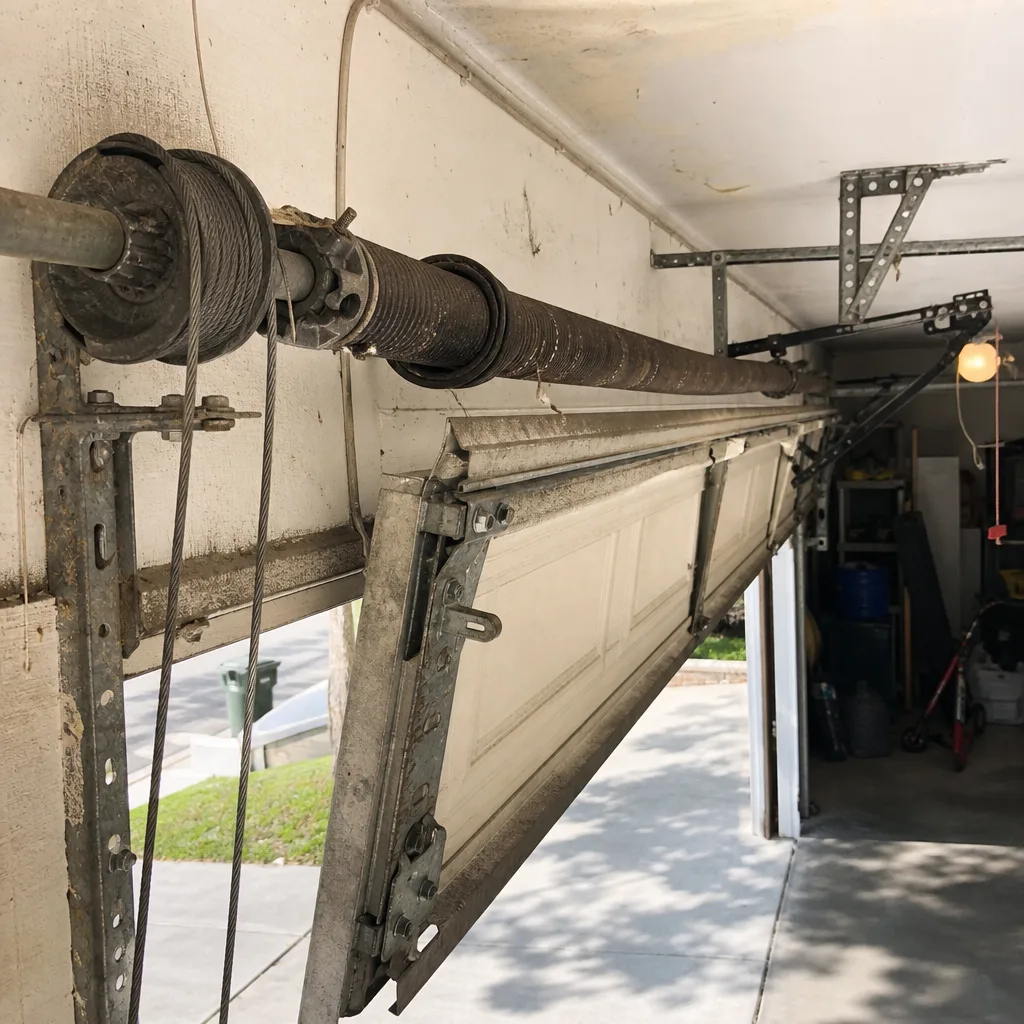
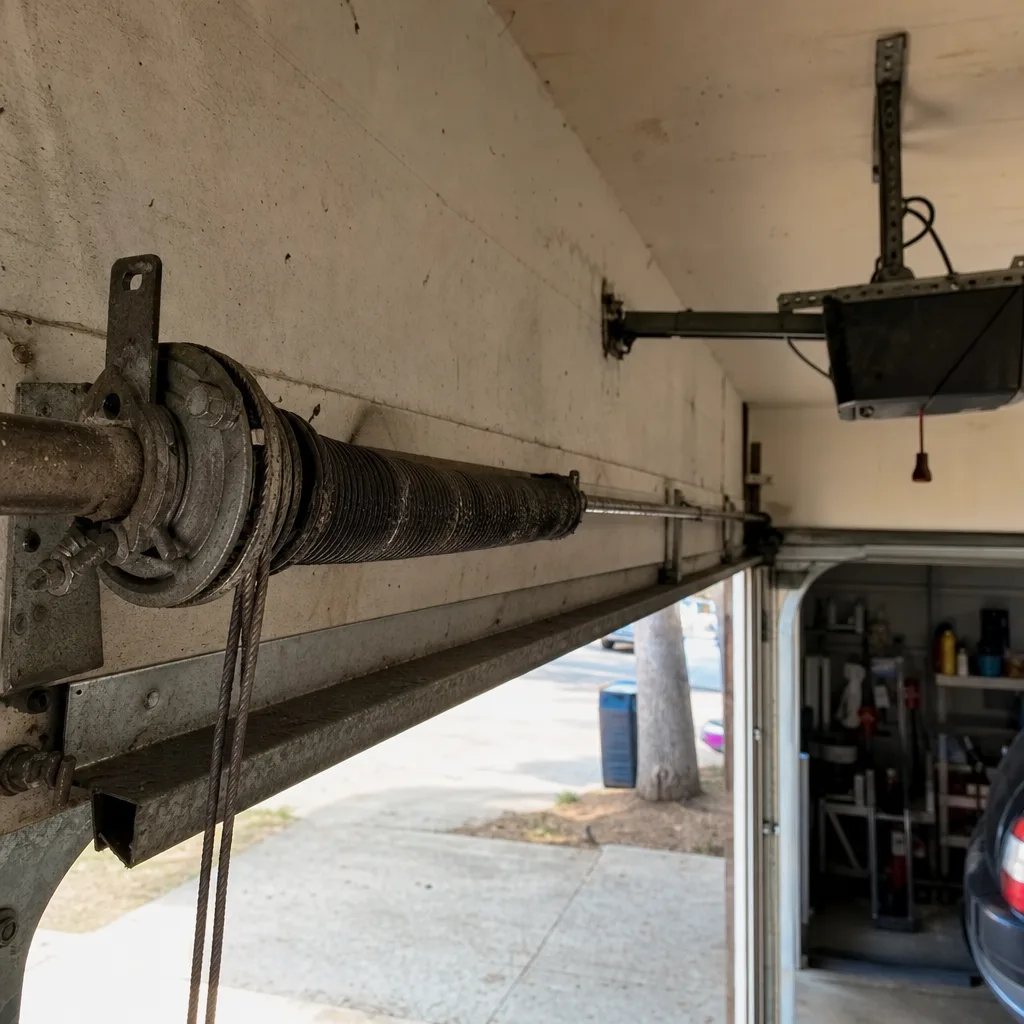
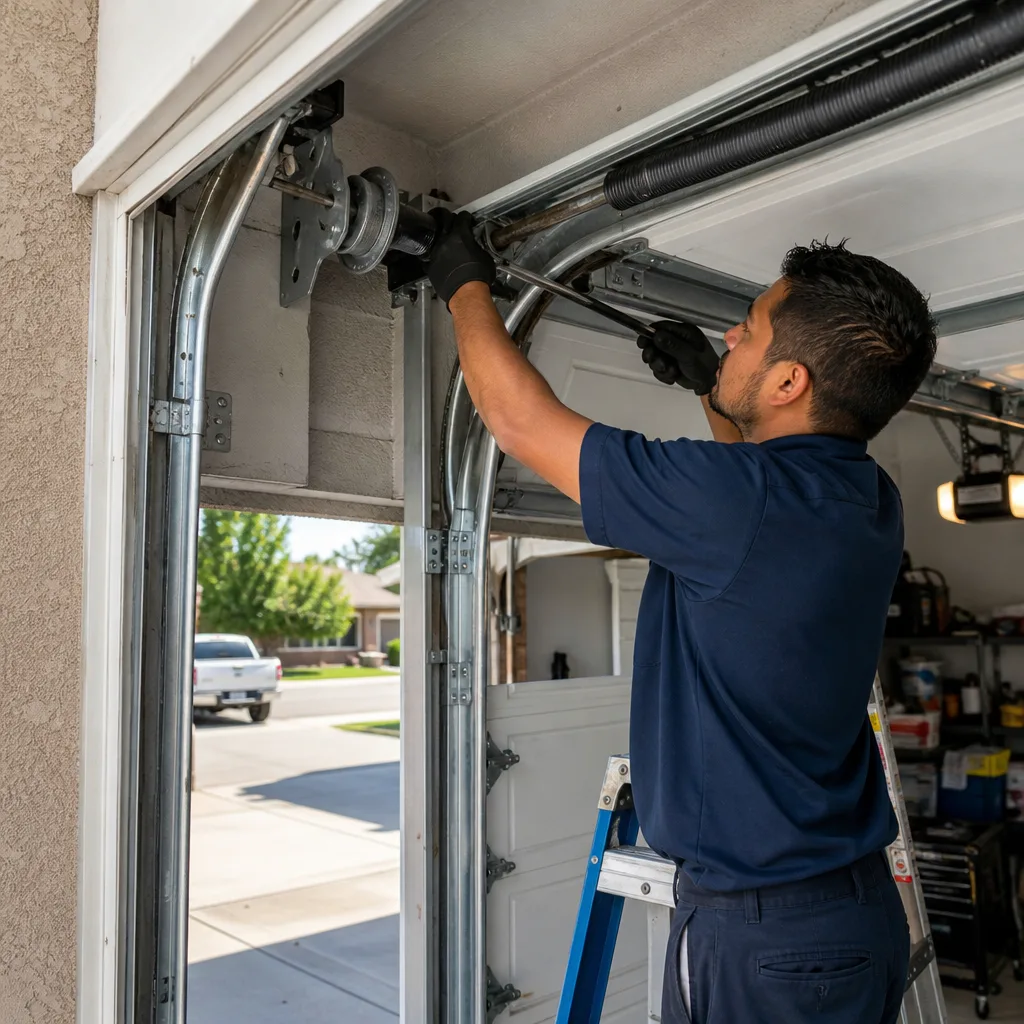
Torsion springs: Look at the spring above the door. A healthy spring has clean, evenly spaced coils. A spring in trouble shows one of three things: a visible gap in the coils, rust accumulating along the coil edges, or the spring looking “stretched” with wider spacing between coils than it had when new. Any of these indicates the spring is near the end of its cycle life, and a spring that snaps under tension releases enormous energy. Do not attempt to inspect a spring closely or touch it. A visual check from a few feet away is all that’s needed.
Cables: The cables run along both sides of the door from the bottom brackets up to the drum near the spring. Look at the bottom few inches of each cable, where it connects to the bottom bracket. Early-stage wear looks like a few broken wire strands poking out from the cable’s smooth surface. Moderate wear is visible fraying where a dozen or more strands have separated. Advanced wear is what we call “birdcaging,” where the strands splay outward in a pattern that resembles a birdcage. If you see birdcaging on a cable in your Upland garage, the cable has already lost the majority of its strength and could snap on the next cycle. Stop using the door and call for service.
Rollers: Nylon rollers with ball bearings should spin freely, and the wheel should look round and smooth. A failing roller shows a flat spot or visible wobble as the door moves. Metal rollers may show rust on the wheel surface or the bearing. Steel rollers without bearings, common on older homes in Upland, wear quickly and produce the grinding noise described earlier. If your rollers are more than 7 years old, replacement with modern nylon rollers is one of the cheapest upgrades you can make for quieter operation.
Track condition: The vertical and horizontal tracks should be straight and parallel. Look for rust, which in Upland’s dry climate is less common but not impossible, especially in garages where water heaters or laundry create humidity. More important is checking that the track brackets are still firmly attached to the wall. A door that’s pulling away from the wall mountings is transferring load into places it shouldn’t go.
Balance Problems: The Crooked Door and What It Means
A garage door that isn’t level when moving is one of the most visible warning signs and one of the most misunderstood. Homeowners often assume a crooked door means a track alignment issue. It usually doesn’t. The common cause is a spring problem on one side, because most residential doors use two springs, and if one has lost tension or broken, the remaining spring is doing uneven work.
Here’s the failure chain when one spring weakens before the other:
- The weakened spring extends slightly farther than its partner, so one side of the door rises faster.
- The door appears crooked during the first two or three feet of travel, then evens out.
- Over time, the uneven load forces the cables to wind unevenly on the drums.
- One cable develops slack and can hop off the drum entirely.
- If the cable comes off, the door can drop suddenly, which is a serious safety event.
If you see your door moving crooked even briefly, the right response is to stop using it and schedule an inspection. The spring repair is straightforward if caught at stage one or two. By stage four, you’re also replacing cables and possibly dealing with a bent track from the door dropping.
Another balance issue is the door that drifts downward after being opened halfway. This is a different problem, usually the result of springs that have lost enough tension that they can no longer hold the door in the mid-position. It’s a clear signal that spring replacement is overdue. You can test this yourself: open the door halfway, release the opener (using the red pull cord), and watch what happens. If the door drifts downward more than a few inches, the springs are failing.
For context on what full Garage Door Repair in Upland involves when springs are replaced, that page details the process and what to expect.
Opener Warning Signs: When the Motor Is the Victim, Not the Cause
Opener failures are frequently misdiagnosed by homeowners as the root problem, when the opener is actually the victim. The motor is the last component in the chain, and it receives stress from everything upstream: springs, cables, rollers, and track alignment. When any of those degrade, the opener works harder and fails sooner.
That said, openers have their own failure modes, particularly in Upland where heat can affect the electronic components and the plastic gears common in some opener models.
Key opener warning signs include:
- The motor runs but the door doesn’t move: This usually indicates a stripped gear inside the opener or a broken drive belt or chain. It’s also a sign that the door itself was too heavy for the opener, and the opener finally gave up.
- The door reverses before fully closing: This is often the safety sensors doing their job, but if the sensors are clean and aligned, the reversal is caused by the opener’s force setting sensing too much resistance. That resistance comes from the door, not the opener. Adjusting the force setting without addressing the underlying door problem just masks the real issue and risks a door that closes when it shouldn’t.
- The opener lights flicker or it loses programming: This points to a failing logic board or capacitor. Modern openers from LiftMaster and Chamberlain with MyQ capability are essentially small computers, and like any computer, the board can fail from heat, age, or power surges.
- The opener gets hot to the touch after a cycle: This is one of the clearest signs of an overworked motor. A properly balanced door shouldn’t cause the opener housing to feel warm. If yours is hot, the door is too heavy for the opener, and the fix is upstream.
If the opener is genuinely failing, Garage Door Opener Repair in Upland covers diagnosis and repair across belt, chain, and screw drive systems, including smart-home-compatible Genie and Chamberlain units.
The Warranty Window: What’s Covered Now, What Won’t Be Later
This section addresses something most warning-sign guides never mention: the relationship between catching problems early and warranty coverage. It’s a financial issue as much as a mechanical one.
Most garage door and opener manufacturers structure their warranties to cover manufacturing defects, not wear-and-tear damage caused by neglect. That distinction matters because failing components often cause secondary damage that voids what would otherwise be covered.
Here’s how it plays out in practice:
- Springs: Some manufacturers, including Amarr and Clopay, offer longer spring warranties when you replace springs as a pair and use factory-specified parts. But if a failing spring is ignored and the cable snaps as a result, the cable damage is typically not covered as a defect. You’ve turned a warranty-eligible spring replacement into an out-of-pocket cable repair.
- Opener gears: A Chamberlain opener with a stripped gear due to a heavy door is usually not a warranty issue. The manufacturer’s position is that the opener was operated outside its design parameters.
- Door panels: If a door panel bends because the door was operated with a broken spring, most warranties won’t cover the panel. The failure is attributed to improper operation, not a defect.
- Cables and rollers: These are wear items on most doors. Raynor and Wayne Dalton treat cables as consumables with limited or no warranty coverage, which means early detection and replacement is the only real protection.
The financial difference between catching a problem early and waiting is significant. A spring replacement done before it breaks is a scheduled repair with predictable pricing. A spring that breaks at 7 a.m. on a Monday with your car trapped inside the garage is an emergency call, and emergency calls cost more because they demand immediate dispatch.
The Failure Timeline: Days of Warning vs. Imminent Failure
Not all warning signs are equal. Some give you weeks or even months to act. Others mean you’ve got hours before the component fails completely. Knowing the difference helps you prioritize.
Warning signs that give you weeks to act:
- New noise during operation (grinding, squealing, or rattling)
- Door moving slightly slower than normal
- Minor cable fraying with only a few broken strands visible
- Visible rust on rollers or hardware
- Door drifting downward when released at mid-travel
- Opener running hot after use
Warning signs that indicate imminent failure, hours to days at most:
- The door has become visibly crooked during travel
- Advanced cable fraying or birdcaging visible at the bottom bracket
- A loud bang from the spring area, even if the door still operates
- The door reverses on every closing attempt, even after cleaning sensors
- The motor runs continuously but the door doesn’t move
- The door drops several inches when the opener releases
The practical takeaway: any warning sign on the second list means stop using the door. Every additional cycle you run is loading a failing component, and when cables snap or springs break, the door can drop with several hundred pounds of force. In Upland, where many homes have rooms directly above or adjacent to the garage, a dropping door is also a structural event for the house.
Common Mistakes to Avoid
- Lubricating a failing component to quiet it down. Spraying lubricant on a grinding roller or squealing spring masks the noise temporarily but doesn’t address the wear. In many cases, the lubricant attracts dust and accelerates the failure. The noise was the useful diagnostic signal, and now it’s gone.
- Adjusting the opener force settings to compensate for a heavy door. The opener is telling you through its safety reversal that the door is too heavy. Crank up the force and you’ve overridden the one safety mechanism designed to protect your family and your car. The correct fix is addressing the door balance.
- Replacing the opener when the problem is the spring. We see this constantly in Upland, especially with older homes. The door is slow, the opener seems weak, so the homeowner buys a new opener. The new opener works better for a few months because it’s fresh, then the same problems return, because the spring was the issue all along.
- Continuing to use the door after a loud bang. A bang from the spring area means something let go, even if the door still operates. Every additional cycle is a gamble, and the payout isn’t worth it.
- Replacing one spring instead of both. On a two-spring door, springs wear at roughly the same rate. If one broke, the other is likely close behind. Replace both and reset the clock.
- Ignoring the door that reverses occasionally. Intermittent problems are still problems. A door that reverses once a week is sending a signal about force resistance or sensor alignment, and intermittent issues have a way of becoming permanent at the worst time.
- Doing a DIY spring replacement to save money. Garage door springs are under hundreds of pounds of tension. The tools required are specialized, and the injury risk is real and serious. This is one repair where professional service is not optional.
When to Call a Professional
Any warning sign involving springs, cables, or track mounting hardware warrants a professional inspection, full stop. Those components are under load at all times, and the energy stored in a torsion spring is enough to cause serious injury if mishandled. For opener problems that involve the motor, gears, or logic board, professional diagnosis is also the right move, because the problem is often upstream in the door itself rather than in the opener.
Garage Door Service Upland offers free estimates throughout Upland, and our technicians are factory-familiar with Amarr, Wayne Dalton, Craftsman, and Raynor systems, among others. If you’ve noticed any of the warning signs in this guide, call (855) 970-2962 and we’ll tell you honestly whether the component needs attention now or can wait. No sales pressure, just a straight answer.
For new door needs or a full replacement, see Garage Door Installation in Upland for what the process looks like from measure to installation.
Frequently Asked Questions
Spring replacement for a standard two-car garage door in Upland typically runs between $250 and $450 for both springs, including labor. The price varies based on spring size, cycle rating, and whether the door uses torsion or extension springs. Call us at (855) 970-2962 for an exact quote for your specific door, and we’ll give you the price before any work begins.
You’re betting against the house if you do. Grinding noise means metal is wearing against metal somewhere in the system, and every cycle makes the damage worse. You might get weeks of use out of it, or the roller might seize up and yank the door off the track tomorrow. It’s not worth the risk when a roller replacement is an inexpensive fix.
A slower door almost always means the springs are losing tension, and the opener motor is now doing work the springs should be doing. The opener won’t last long under that load. If your door takes noticeably longer to open than it did six months ago, call us at (855) 970-2962 for a spring inspection before the spring breaks and takes the opener out with it.
No. We quote a price before any work starts, and that’s the price you pay. If we find additional problems during the repair, we’ll show you what we found and give you a separate quote for that work before doing it. You’ll never get a surprise invoice at the end of the job.
Yes. Our trucks carry springs in all common sizes, cables, rollers, hinges, and the most common opener parts for LiftMaster, Chamberlain, Genie, Craftsman, and other major brands. In most cases, we can complete the repair in one visit without ordering parts and returning later.
Standard torsion springs are rated for about 10,000 cycles, which works out to roughly 7 to 10 years for a typical Upland household using the door 4 to 6 times per day. Higher-cycle springs rated for 25,000 or more cycles are available and cost more upfront but can last 20-plus years. We’ll always tell you what’s currently on your door and what the options cost.
The Bottom Line
Garage doors give you signals for weeks or months before they fail. The noise change, the slower operation, the slight crookedness on the way up, the frayed cable you noticed while looking for a box in the garage; these are all early warnings that point to specific components. When you catch a spring at 70 percent of its life, it’s a scheduled repair. When you wait for the loud bang, it’s an emergency. In Upland, where the climate accelerates metal fatigue and most homes use their garage door as the front door, paying attention to the warning signs will save you money and keep your door running for years past its expected service life. If you’ve noticed any of the signs in this guide, call (855) 970-2962 and we’ll take a look. The estimate is free, and the answer will be straight. For more guides & resources on keeping your door reliable, visit our blog.
Return to the Garage Door Service Upland home page for full service details.
Written by the team at Garage Door Service Upland, serving Upland since 2013.
See the difference
 Before
 After
 Before
 After
 Before
 After