
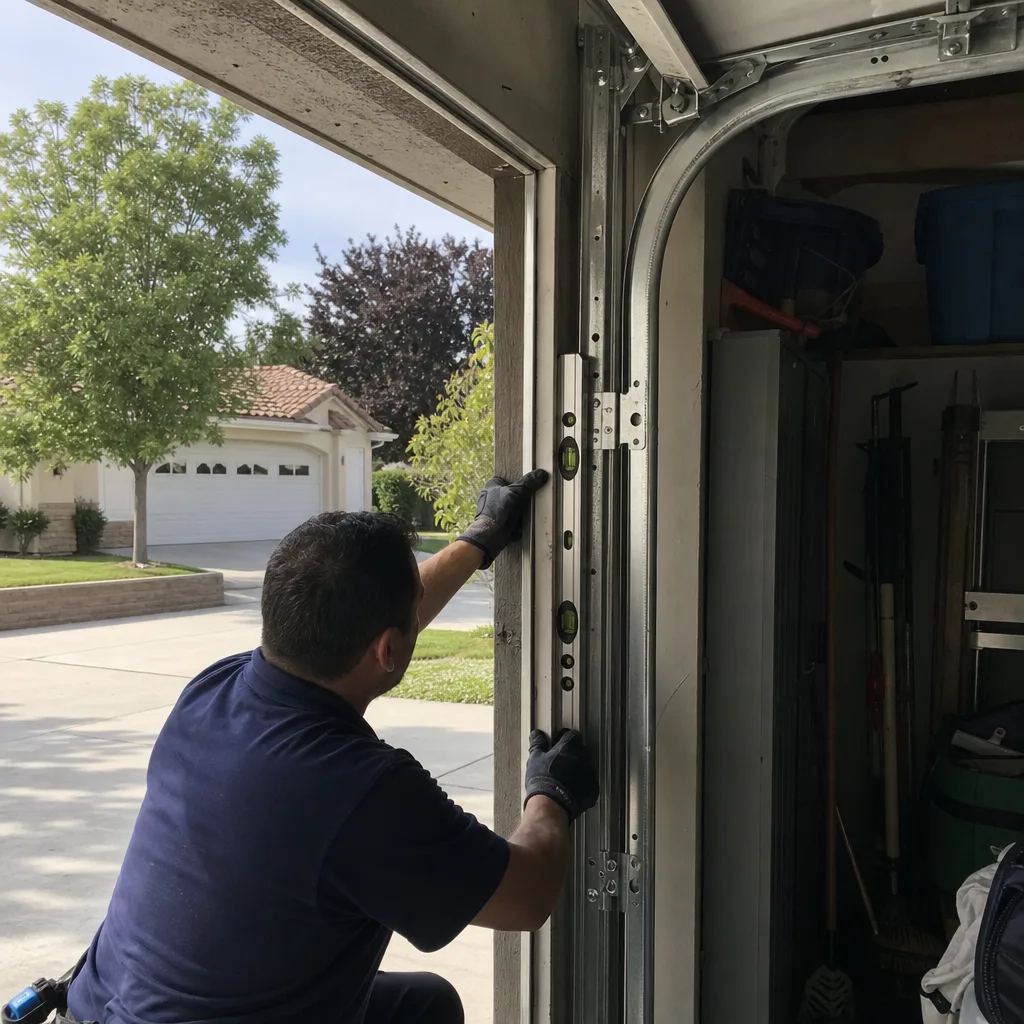
Last updated November 2, 2026
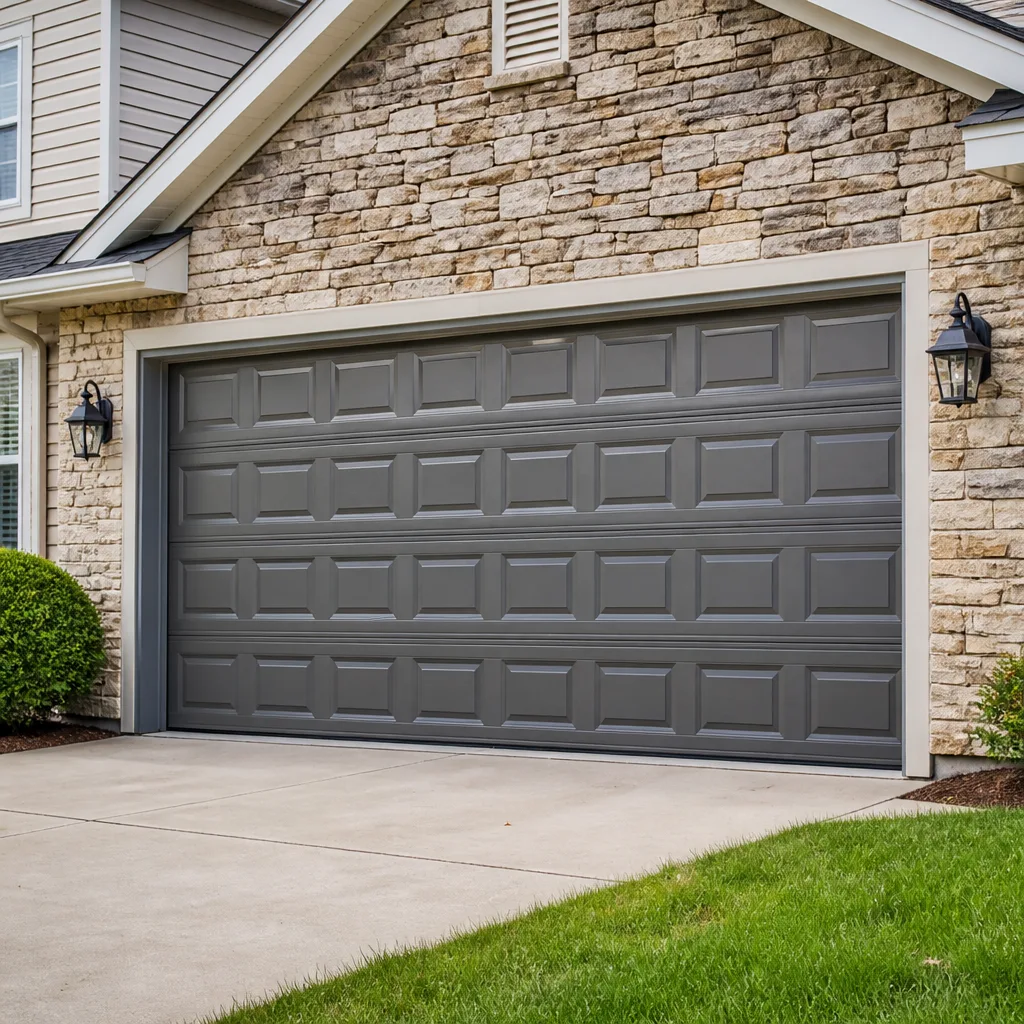 Raised-panel steel
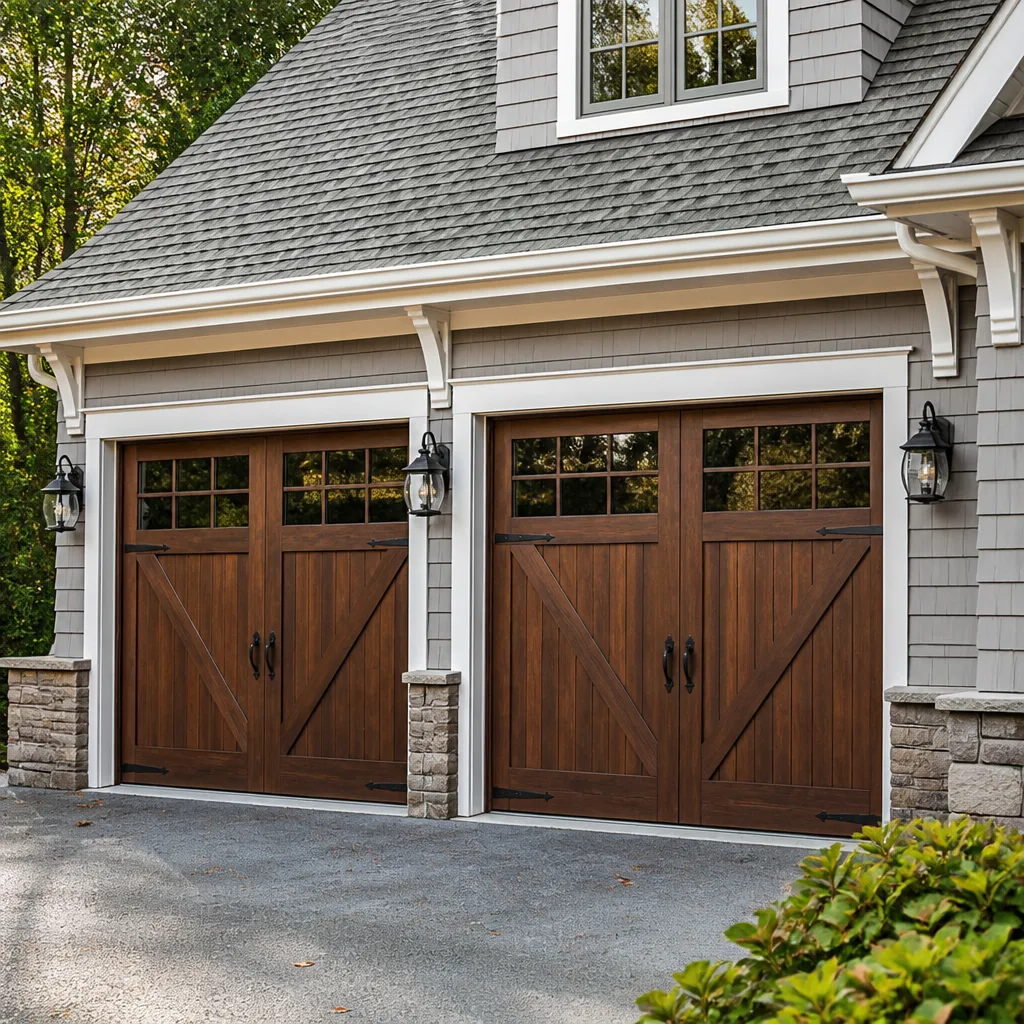 Carriage house
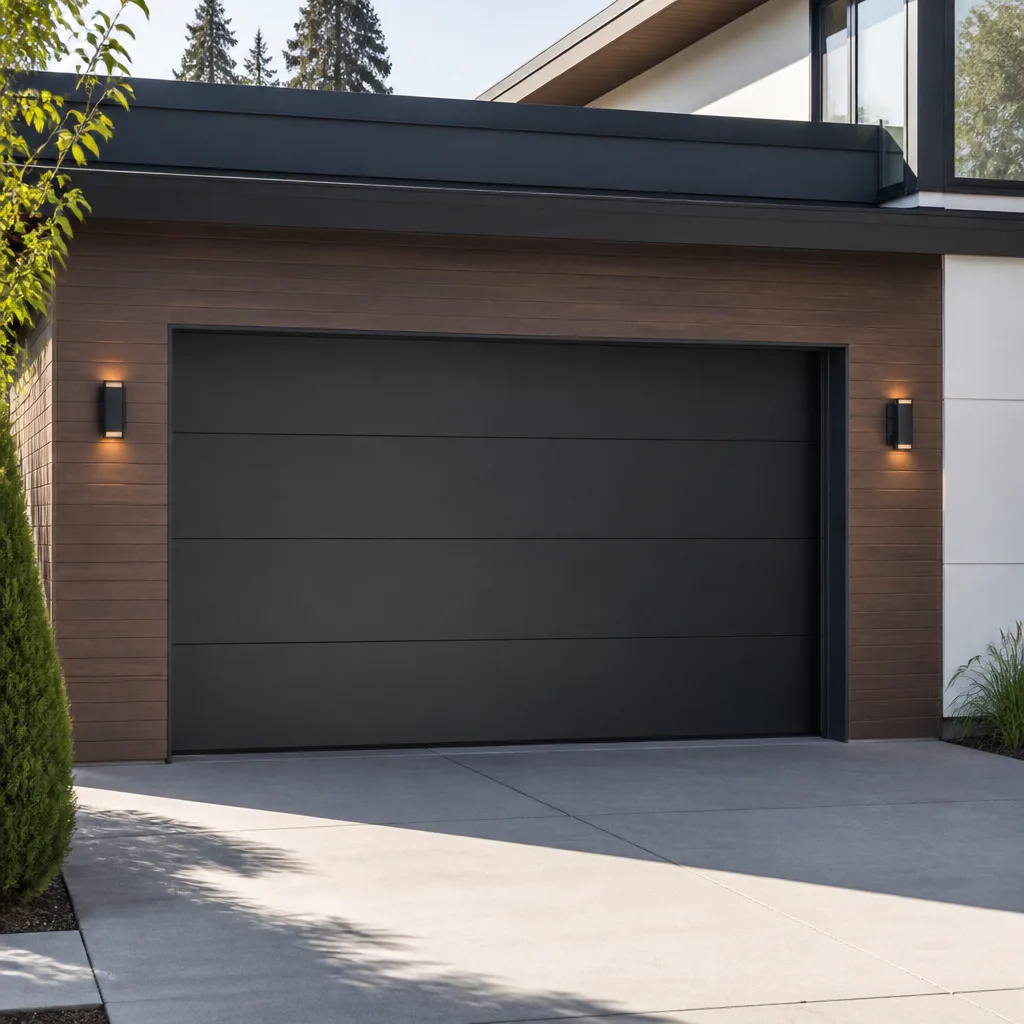 Modern flush
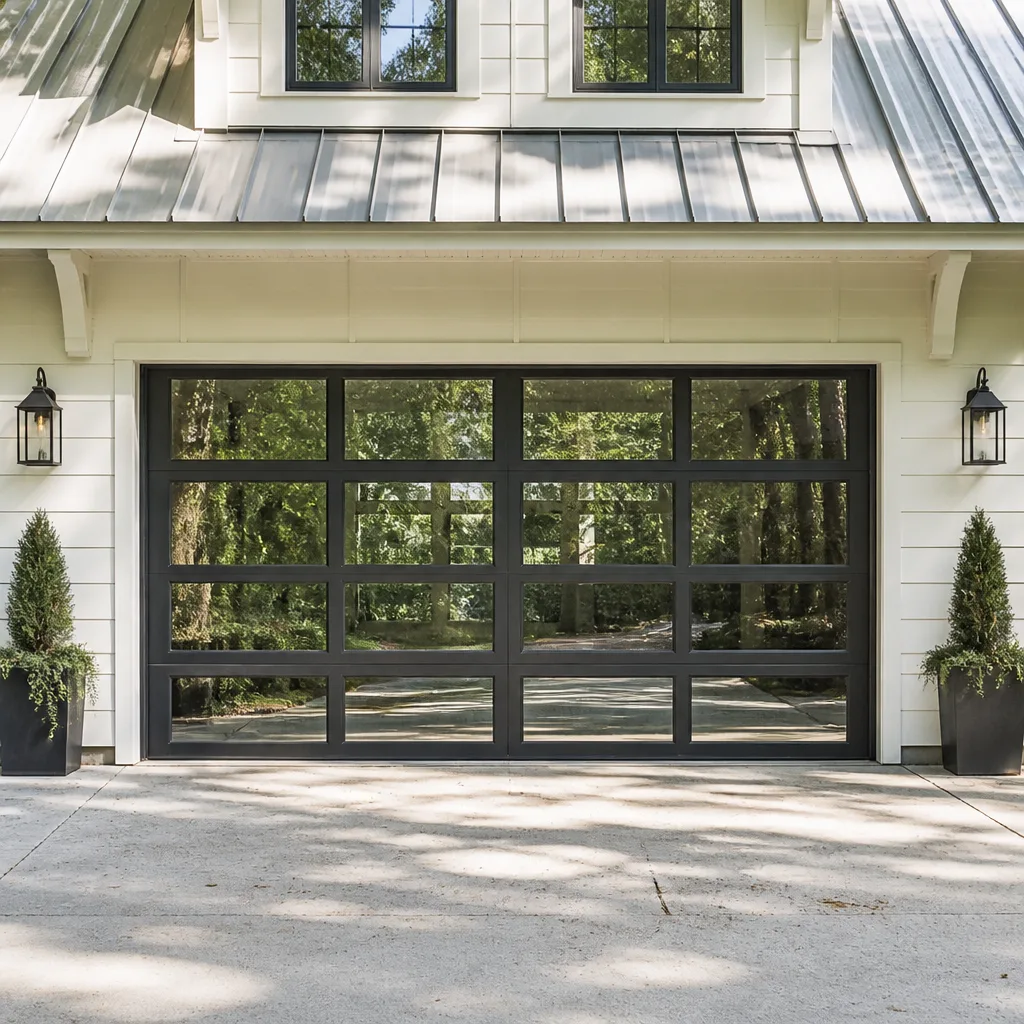 Full-view glass
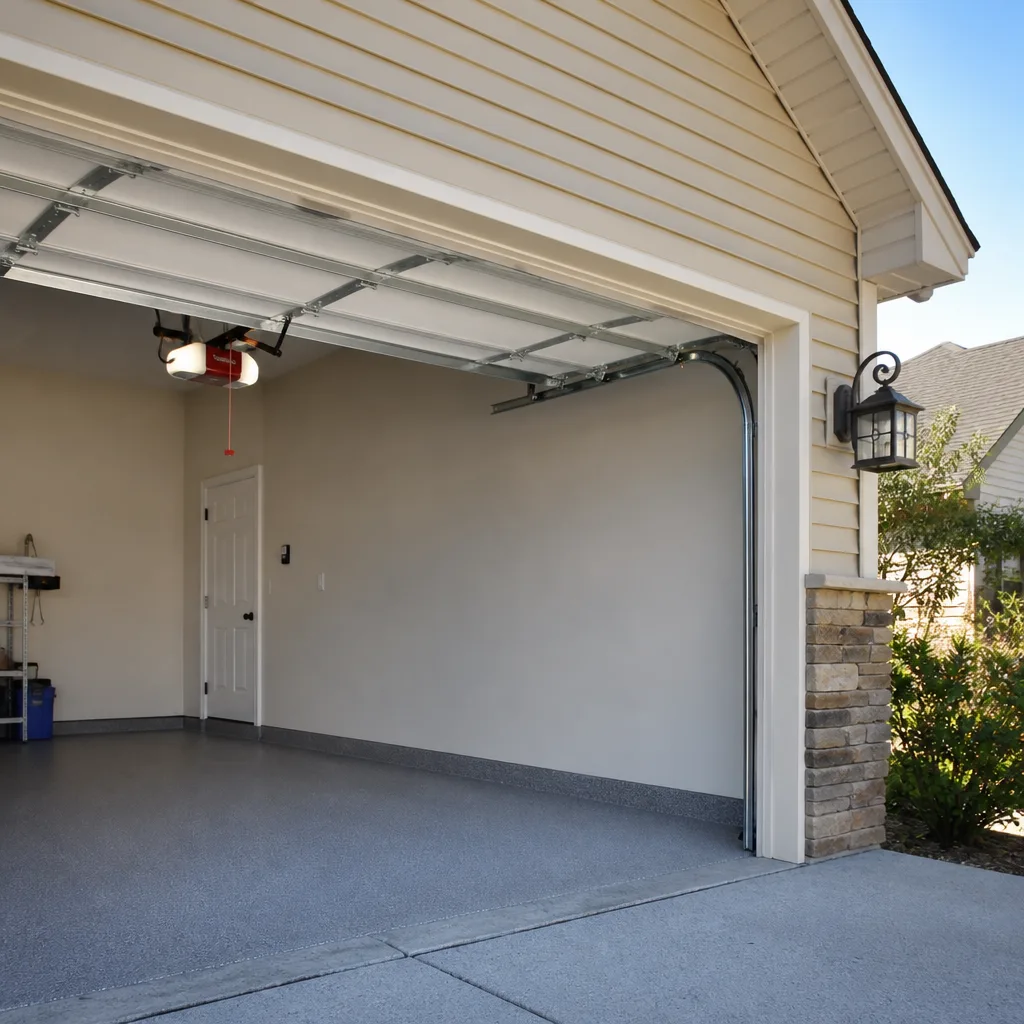 LiftMaster openers
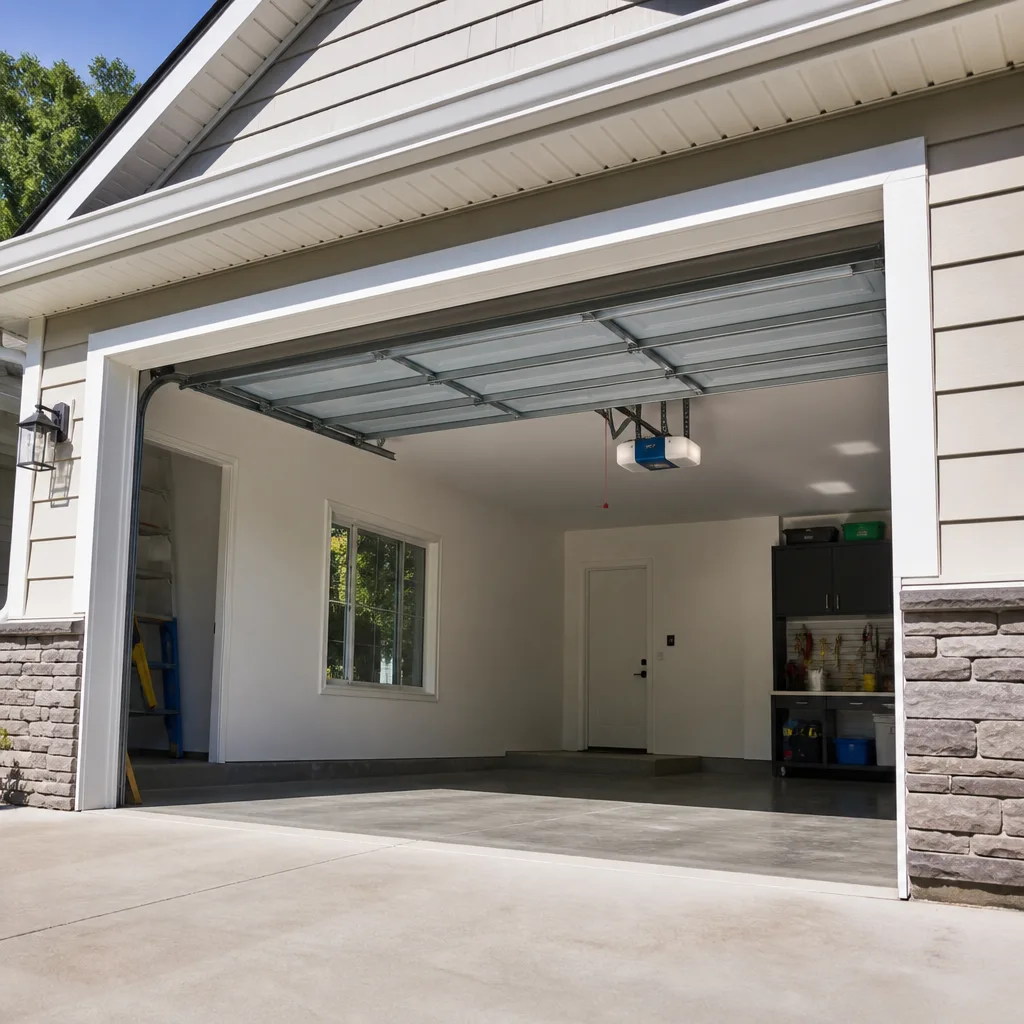 Chamberlain openers
Full 25-point door and opener safety check with every visit - springs, cables, rollers, tracks, and your LiftMaster or Chamberlain opener included
You get a price before we start. It does not change when the truck arrives.
Get your free estimateGarage Door Emergency Preparedness Guide for Upland Homes
Here’s something most Upland homeowners don’t realize until the worst possible moment: during a power outage, your automatic garage door opener becomes dead weight. And Upland’s high-fire-risk Red Flag events are producing more outages each year, not fewer. A 400-pound door that you’ve never opened by hand, in the dark, while an evacuation notice blares on your phone, is not a problem you want to solve for the first time under pressure. This guide walks through exactly what to do before, during, and after a garage door emergency, from manual release procedures broken down by opener brand to battery backup testing and post-emergency inspections. For a broader look at keeping your door in top shape, see our Garage Door Repair Maintenance Checklist for Upland Homeowners. By the end, you’ll know your garage door system as well as many technicians do.
Quick Answer
The core of garage door emergency preparedness in Upland comes down to four things: you know how to pull your opener’s manual release by feel, you have a tested battery backup or a manual operation plan, you’ve practiced opening the door by hand at least once, and you have a professional on speed dial for the things you shouldn’t fix yourself. Most emergencies get worse because homeowners wait until the spring snaps or the power dies to learn these basics. Fifteen minutes of preparation today prevents a stranded vehicle or compromised home tonight.
Styles & brands we work with
- Raised-panel steel
- Carriage house
- Modern flush
- Full-view glass
- LiftMaster openers
- Chamberlain openers
Table of Contents
- How to Operate Your Garage Door Manually: Brand-by-Brand Guide
- When the Manual Release Cord Is Jammed or Won’t Engage
- Battery Backup Systems: What Upland Homeowners Actually Need
- Emergency Parts and Contact Protocol: What to Have Ready
- Wildfire Evacuation Scenario: Keeping the Garage Door From Becoming a Bottleneck
- Post-Emergency Inspection Checklist: Before You Return to Automatic Use
- Common Mistakes to Avoid
- When to Call a Professional
- Frequently Asked Questions
How to Operate Your Garage Door Manually: Brand-by-Brand Guide
Every automatic garage door opener has a manual release mechanism. It’s a cord hanging from the trolley, usually red, that disconnects the door from the opener carriage so you can lift it by hand. The problem is that pull cords differ slightly by brand, and if you’ve never used yours, finding it in a dark garage while stressed is harder than it should be. We’ll walk through the procedure for the four major brands we service most often in Upland: LiftMaster, Chamberlain, Craftsman, and Raynor.
The universal basics apply across all brands. Locate the pull cord first, usually near the center of the door track or just behind the opener motor. Pull straight down firmly until you feel or hear the release. The door is now disconnected from the opener. Lift the door by the handle or the bottom edge, using your legs, not your back. Once up, secure it if possible. A disconnected door in the open position can slam shut if the springs are worn, so use a vice grip or locking pliers clamped to the track just below a roller to hold it open.
Now here’s where brands differ.
LiftMaster Manual Release
LiftMaster units, including the popular 8550 and 8360 series, use a red pull cord hanging from the center trolley. Pull it straight down, not at an angle. You’ll hear a distinct snap as the trolley disengages. On newer models with MyQ technology, the opener will beep once to confirm disconnection. After power returns, operate the opener once with the door disconnected, and the trolley will re-engage automatically on the next cycle. That’s a nice feature we point out to Upland homeowners because it means one less thing to remember during an already stressful power restoration.
Chamberlain Manual Release
Chamberlain openers are built by the same parent company as LiftMaster, so the mechanism is nearly identical. The red cord hangs from the same center trolley position. Pull it straight down. On Chamberlain models with battery backup, there’s a green light on the motor that stays illuminated for several seconds after disconnection. The re-engagement process is the same: run the opener once while disconnected, and the trolley locks back onto the carriage automatically. One note: Chamberlain remotes sometimes get confused after a manual release if a power surge coincided with the outage. If your remote doesn’t work after power returns, you may need a quick reprogram. That’s an easy fix but worth knowing before it catches you off guard.
Craftsman Manual Release
Craftsman openers follow the same basic design, but the pull cord on some older models can be stiffer than LiftMaster or Chamberlain. We’ve seen plenty of Upland garages with Craftsman units from the 1990s and early 2000s still functioning well, but age makes the release cord harder to pull. If you’re struggling, don’t yank it hard. The cord attaches to a release lever inside the trolley, and excessive force can snap the cord itself, leaving you with no manual release at all. Apply firm, steady pressure instead. On some Craftsman models, the cord has a T-handle, while others just have a knotted end. If yours has pulled through into the trolley housing, that’s a sign the release has been used frequently or the spring inside the lever is worn. Have it checked before you actually need it.
Raynor Manual Release
Raynor garage doors are solid, well-built doors, but the openers paired with them vary. If your Raynor door runs on a LiftMaster or Chamberlain opener, follow those instructions. If it’s paired with a Raynor-branded opener, the manual release cord is typically located at the front of the rail near the motor. The release mechanism engages a lever on the carriage, and some models require you to pull the cord toward the door rather than straight down. This is a small but important distinction that catches homeowners off guard during an emergency. Test yours before you need it, and you won’t be fumbling with the angle in the dark.
If you’d rather have a professional walk you through your specific unit, our garage door opener repair service in Upland includes a demonstration of manual operation on every visit. Most homeowners master it in under two minutes with someone standing next to them.
When the Manual Release Cord Is Jammed or Won’t Engage
The manual release is only useful if it actually works. A jammed or unresponsive release cord during a power outage is one of the more common emergency scenarios we hear about from Upland residents, especially in older homes in the north Upland foothills where garage temperatures swing dramatically between seasons. Heat and cold cycles cause metal components to expand, contract, and sometimes bind.
Here’s what usually causes a jammed release cord, and what you can safely do about it.
- Check for obstructions first. Look at the track above the door. Sometimes a misplaced box, a ladder, or seasonal decorations shift and block the carriage path. If the carriage can’t move, the release won’t engage no matter how hard you pull.
- Test the cord tension. A properly functioning release cord should have a slight give when you pull it. If it feels rigid and unyielding, the release lever inside the trolley is likely seized. This is a mechanical failure, not something you can fix from the ground without the right tools and experience with the opener’s internal assembly.
- Try the power disconnect. If your opener has a battery backup, unplug the unit from the wall outlet first. Some models with active backup systems won’t allow manual release while live power is still connected because the trolley is locked by the motor. This is true for several LiftMaster and Chamberlain units we work on regularly. Disconnecting power first releases the electronic lock.
- Apply controlled pressure. If the cord still won’t budge after power is disconnected and you’ve checked for obstructions, apply steady, gradually increasing downward pressure. Don’t jerk. The release lever has a spring inside that can break if yanked. If it doesn’t release with steady pressure, stop.
- Do not attempt to disassemble the opener. The trolley mechanism sits under spring tension. Opening the housing without proper training puts you at risk of a serious injury, and it will void any warranty you might have. This is the point where you call a technician.
One more Upland-specific note: garages in the northern foothills deal with fine dust from the surrounding terrain. That dust settles into the opener rail and trolley over time, mixing with grease to create a paste that can seize the release mechanism. If your release feels gritty or requires more force than it used to, that’s the likely culprit. A professional cleaning and lubrication of the rail and trolley resolves it in most cases.
Battery Backup Systems: What Upland Homeowners Actually Need
Garage Door Permits, Codes & Inspections in CA: What You Need to Know – including the battery backup mandate that has required it on newly installed garage door openers since July 2019. That means if your opener was installed after that date, it almost certainly has a battery backup system, even if you’ve never thought about it. If your opener predates 2019, you either need to add a backup system or have a solid manual operation plan. For Upland homeowners, where Red Flag warnings and Public Safety Power Shutoffs have become a regular part of life, this isn’t a nice-to-have feature anymore.
The battery in a backup system is not infinite. Most units provide between 10 and 20 open-and-close cycles on a full charge, but that number drops as the battery ages. The critical question is whether your battery can still deliver enough cycles to get your car out during an evacuation, not whether it works at all. A battery that opens the door once in a test environment is not the same as one that opens it three times with a vehicle exiting between each cycle.
Here’s how to evaluate and test your backup system the way we do on service calls in Upland:
- Check the battery age. Garage door opener backup batteries are typically rated for three to five years. If your opener is past that window, assume the battery is significantly degraded regardless of what the indicator light says.
- Run a full cycle test every six months. Unplug the opener from the wall outlet, then use the remote or wall button to open and close the door fully three times. If the door slows noticeably on the third cycle, your battery is failing.
- Listen for the beeping. Most LiftMaster and Chamberlain battery backup units beep every 30 seconds when running on battery power. That’s helpful, but it doesn’t tell you how many cycles remain. Treat the beep as a warning to open the door once and keep it open, not to continue cycling.
- Replace before the season matters. If your battery is more than three years old, replace it proactively before fall, when Upland’s dry winds pick up and outage risk rises. A new backup battery runs $60 to $100 for most units and takes a technician about 15 minutes to install.
One nuance worth noting: not all battery backups are created equal. The LiftMaster 8550W and Chamberlain B970, both common in Upland garages, use DC motors with integrated battery backup systems that deliver more cycles than older AC motor add-on units. If you’re running a Craftsman or Raynor opener from the pre-2019 era, you’ll likely need an external battery backup unit wired between the wall outlet and the motor. These work fine but typically provide fewer cycles, so a manual operation backup plan becomes more important.
Emergency Parts and Contact Protocol: What to Have Ready
The garage door emergency you can’t predict is the one that does the most damage. What you can do is make sure that when something fails, the parts you need are either on hand or one call away. We’ve put together this list based on what we see most often in Upland: broken torsion springs, snapped cables, burned-out opener motors, and stripped gears.
What to keep in your garage, no matter what:
- Vice grips or locking pliers. If your door comes off the track or you need to secure it in the open position after a manual release, a pair of vice grips clamped to the track below a roller is the safest temporary lock.
- Work gloves. Garage door edges are sharp. A 400-pound door that shifts can pinch hard. Gloves prevent cuts and improve grip.
- A working flashlight or headlamp. During a power outage, the overhead garage light isn’t coming on. Keep a reliable light source near the inner garage door, not buried in a toolbox.
- Your opener’s brand and model number. Write it on a piece of masking tape and stick it to the side of the motor. When you call a technician, that single piece of information cuts diagnosis time significantly.
- Your technician’s phone number. A physical card stuck to the garage wall beats scrolling through your phone in a stressful moment, especially if your phone is dying because the power is out.
What a prepared homeowner does before the failure:
- Tests the manual release at least once every six months, in daylight, with a helper present.
- Runs the battery backup test described above on the same schedule.
- Identifies the main components by name: springs, cables, rollers, hinges, trolley, carriage, opener motor. You don’t need to be a technician, but knowing that a “spring” is the big coiled thing above the door and a “cable” is the wire running along the track makes phone diagnosis much faster.
- Has a plan for a door that won’t open: a second vehicle outside the garage, a neighbor with a key, or at minimum, a clear path to a side door that doesn’t depend on the garage door functioning.
- Keeps one external battery pack charged for phone charging during outages. The garage door is one problem. A dead phone that prevents you from calling for help is a compounding emergency.
When a homeowner has this protocol in place, a broken spring at 7 p.m. on a dry, windy evening goes from a crisis to a scheduled repair. That’s the difference preparation makes.
Wildfire Evacuation Scenario: Keeping the Garage Door From Becoming a Bottleneck
This is the scenario that makes emergency preparedness a life-safety issue for Upland homeowners rather than a maintenance concern. The hillside neighborhoods north of Foothill Boulevard, including San Antonio Heights and the streets climbing toward Euclid Avenue, sit directly in the wildland-urban interface zone. When an evacuation order comes, minutes matter. A garage door that won’t open doesn’t just trap your car inside. It can trap your entire family in the house if the front door is blocked by smoke, debris, or locked gates, which many Upland properties have.
The failure chain works like this: power goes out as fire approaches or as Southern California Edison initiates a Public Safety Power Shutoff. Your garage door opener is now running on battery backup, if you have one. The battery gives you a limited number of cycles. If you use a cycle in the morning to get to work, another at night to get home, and the battery is already two years old, a third cycle on evacuation morning may not happen. Worse, in the rush to leave, a family member hits the wall button out of habit, the door hesitates, and now the opener’s logic board thinks something is wrong and locks out entirely.
Here’s how to make sure your garage door never becomes your evacuation bottleneck:
- On Red Flag warning days, park one vehicle in the driveway. Not the street, the driveway. This means even if the garage door fails completely, you have a clear means of escape that doesn’t depend on the door operating at all.
- On Red Flag days, disconnect the automatic opener and leave the door in manual mode. That’s a pull of the release cord. The door stays down and secure but can be lifted by hand in seconds. Yes, you lose the convenience of automatic operation for a day or two. You gain the certainty that the door will open when you need it to. For homes in the highest-risk zones of Upland, this is the single most effective evacuation preparation move you can make.
- Test your battery backup the evening before the winds pick up. Not the morning of. Wind events in Upland follow predictable seasonal patterns. Watching the forecast gives you a 24 to 48 hour warning window.
- Remove any cars parked in front of the garage door inside the garage. A car parked too close to the door means you can’t lift it manually even if the release works. Keep a two-foot clearance between your vehicle’s bumper and the garage door at all times during fire weather.
- Know your evacuation route doesn’t include backing out. If two cars share a single garage, coordinate with your household so the car that needs to leave first is parked in the rear position. Rearranging cars in a smoke-filled garage in the middle of an evacuation is how injuries and delays happen.
We’ve had Upland homeowners tell us they never thought about their garage door during fire season until a close call forced them to. The ones who prepared describe the same feeling: the evacuation was still stressful, but the garage door was one less variable in an already overwhelming situation. That’s the goal.
Post-Emergency Inspection Checklist: Before You Return to Automatic Use
After any emergency event, whether it’s a forced manual operation, a power surge, a door that was physically forced open, or an impact from a vehicle, your garage door system needs a careful inspection before you trust it with automatic operation again. Skipping this step is how minor damage becomes a major failure days or weeks later. We’ve seen doors that survived a forced operation continue working fine for three weeks before a cable finally snapped under the accumulated stress.
Here’s the checklist we recommend for every Upland homeowner after an emergency event.
- Check the door balance. Disconnect the opener using the manual release, then lift the door by hand to waist height. Release it. A properly balanced door stays in place. If it drops, the springs are worn or broken. If it rockets up, the springs are over-tensioned. Both conditions require professional adjustment. Do not operate the door automatically until balance is confirmed.
- Inspect both cables. Look at the cables running along each side of the door from the bottom brackets to the drums above. Check for fraying, kinks, or loose strands. A frayed cable can snap without warning, and a snapped cable under spring tension is dangerous.
- Listen to the opener. Plug the opener back in and run it through one open-and-close cycle. Grinding means the gears are stripped. A labored hum means the motor is struggling against resistance. Clicking sounds usually indicate the limit switch or a relay issue. Any abnormal noise gets checked before further use.
- Check the rollers and hinges. Look at each roller as the door moves. Wobbling rollers or hinges that appear bent or loose indicate track misalignment, which can worsen quickly under automatic operation.
- Test the auto-reverse safety feature. Place a 2×4 or similarly sized object flat on the floor directly under the door’s path. Close the door. It should reverse within two seconds of contacting the object. This is a critical safety feature, and if it fails, the door becomes a serious hazard.
- Look for track wear or impact marks. If the door was forced or hit by a vehicle, the tracks may have bent or shifted. Run your eyes along each track from the floor to the curve above the motor. Any visible kink or gap between the track and the mounting brackets needs correction.
- Verify the emergency release re-engaged properly. After power returns and the door has run a cycle, the trolley should automatically reconnect. Pull gently on the release cord. It should be taut but not tight. If the door moves independently when you try to lift it, the re-engagement failed and the opener will run without the door attached.
If any item on this checklist raises a concern, that’s the time to call a technician for a full evaluation. A garage door repair in Upland is always less expensive and less stressful when the problem is caught early, before the door comes off its track or the spring fully breaks.
Common Mistakes to Avoid
- Never testing the manual release until you need it. This is the mistake we see most often. Upland homeowners buy a house with an automatic opener, use it for years, and discover on the day of an outage that their release cord is stuck, broken, or impossible to find. Test it twice a year.
- Forcing a door that won’t open. If the door won’t lift by hand after releasing the opener, do not force it. A broken spring or an obstruction on the track is causing the resistance. Forcing the door can cause the cable to snap off the drum, the track to bend, or worse. Call a professional if the door doesn’t lift smoothly.
- Ignoring the beeping from your opener. That beeping during a power outage means the opener is running on battery. It’s not an alarm to silence, it’s information. Open the door once, get your car out if needed, and leave the door in manual mode until power returns. Every extra cycle eats battery life you might need later.
- Assuming a surge protector is enough. Garage door openers are vulnerable to power surges during the lightning and wind events that Upland sees in the late summer and fall. A basic power strip surge protector helps, but a dedicated surge protector rated for motor loads, or a whole-house surge protector, is what actually protects the logic board from frying. A single lightning strike nearby can destroy the opener’s circuit board even with a basic surge strip in place.
- Leaving the door disconnected from the opener without securing it. After a manual release, an unsecured door in the closed position can actually be lifted by hand from outside with the right leverage, especially if the springs are worn. An unsecured door in the open position can slam shut. Use vice grips as described earlier, or reconnect the opener as soon as power returns.
- Putting off spring replacement. Torsion springs have a rated cycle life, typically 10,000 cycles for standard springs. Over years of daily use, they weaken. A weakened spring puts more load on the opener motor, causing premature failure. If your door feels heavy when lifting it manually, your springs are due for replacement before they break suddenly.
- Treating the garage door as a DIY project after an emergency. After a forced operation or impact, the temptation is to look at the door, think it’s fine, and move on. What looks fine from a visual glance often hides a hairline crack in a hinge, a partially frayed cable, or a rail that’s just slightly out of alignment. Those small issues become big failures. Have a professional inspect the system after any abnormal event.
When to Call a Professional
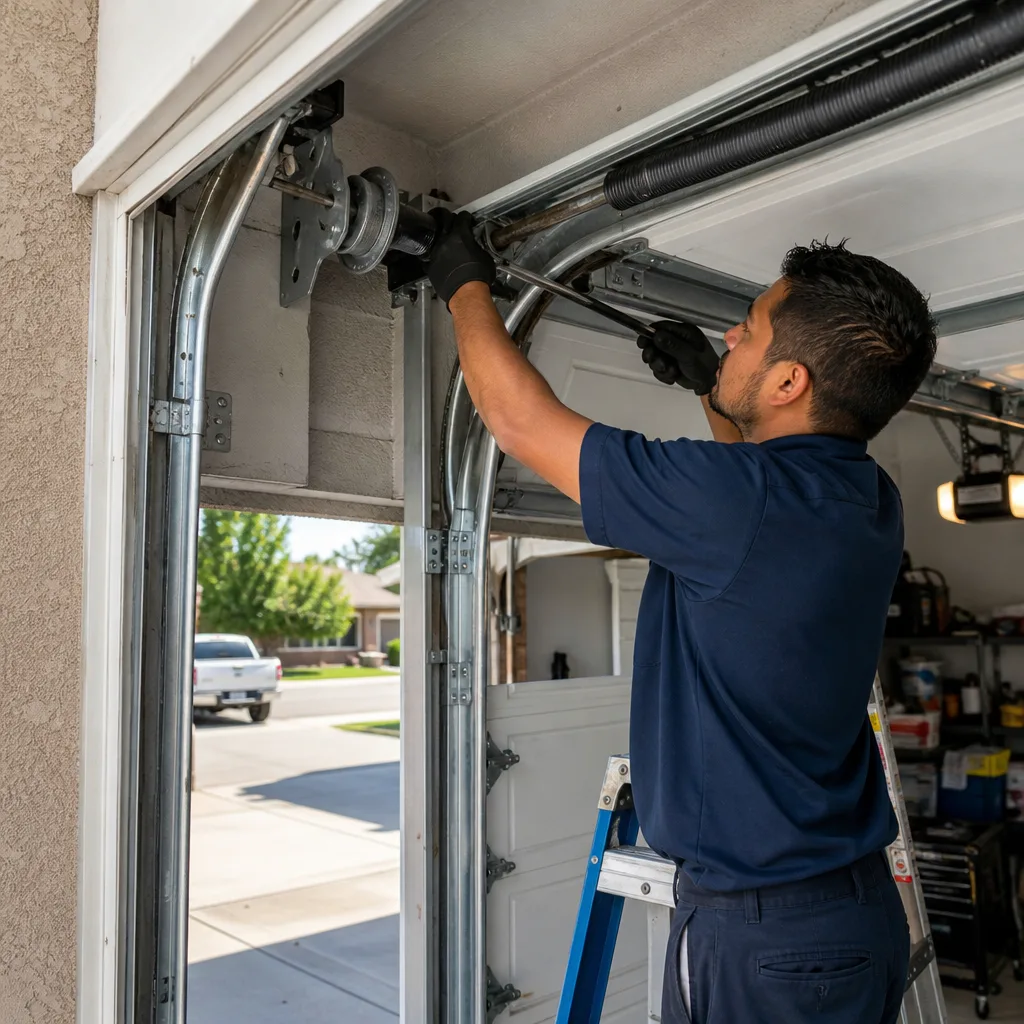
Some garage door problems are safe to handle yourself, and some absolutely are not. You can, and should, pull the manual release during an outage. You can, and should, run the balance test and the auto-reverse test. You should not attempt to replace a torsion spring, which is under hundreds of pounds of tension and requires specialized winding bars. You should not attempt to re-cable a door that has snapped a cable. You should not attempt to repair or replace the opener’s logic board during a power surge event. These are the situations where a trained technician with the right tools and factory knowledge of your specific brand is the only safe call. Garage Door Service Upland offers free estimates throughout Upland, and our technicians work on LiftMaster, Chamberlain, Craftsman, Raynor, and every other major opener brand. Call (855) 970-2962, and we’ll get your door back to safe, reliable operation.
Frequently Asked Questions
Pull the red emergency release cord hanging from the trolley near the center of the door track, then lift the door by hand using the handle or bottom edge. If the cord won’t release, unplug the opener first to release the electronic lock, then try again with firm, steady pressure. Practice this procedure before you need it so it’s second nature during an actual outage.
Any opener installed in California after July 2019 has a battery backup system by law, but older openers may not. To test yours, unplug the opener from the wall and try operating the door with the remote. If it works while unplugged, you have a functioning backup system. If it doesn’t, you’re running on manual release only during outages.
Test your manual release and battery backup every six months, and replace your backup battery every three to five years. The best time in Upland to run these tests is early spring and early fall, before the summer heat and the fall wind season put the most stress on your door and your power supply.
Pull the manual release cord to disconnect the door from the opener, then lift the door by hand. If the door is too heavy to lift, the springs have failed and you need an alternate exit. Park one vehicle in the driveway on Red Flag days and keep a clear path to a side door so a non-functioning garage door never blocks your family’s exit route during an emergency in Upland.
Emergency repair costs vary widely depending on the component that failed. A broken spring replacement typically runs $180 to $340 depending on the spring type and door weight, while a snapped cable or stripped gear sits in a similar range. Opener replacement falls between $350 and $600 for most models. For an exact quote on your specific door and opener brand, call (855) 970-2962, and we’ll give you a free estimate before any work begins.
You can safely handle the manual release, battery testing, and basic inspections described in this guide. You should not attempt to repair or replace torsion springs, cables under tension, or opener logic boards. These components carry enough stored energy to cause serious injury, and improper repairs often create more expensive problems than the original failure.
The Bottom Line
Garage door emergency preparedness for Upland homes comes down to knowledge, testing, and a written-down plan for when things go wrong. Know your opener brand and how its manual release works. Test your battery backup on a regular schedule and replace it before it fails. Have a clear protocol for Red Flag days that includes parking a vehicle in the driveway and disconnecting the automatic opener if needed. Inspect the door carefully after any emergency event before returning to automatic operation. And when the problem is beyond a homeowner’s safe scope, call a professional. Fifteen minutes of preparation now is the difference between a stressful inconvenience and a genuine emergency. Explore more guides & resources to keep your garage door ready year-round. If you have questions about your specific door or opener, Garage Door Service Upland is one call away at (855) 970-2962.
Written by the team at Garage Door Service Upland, serving Upland since 2013.
See the difference
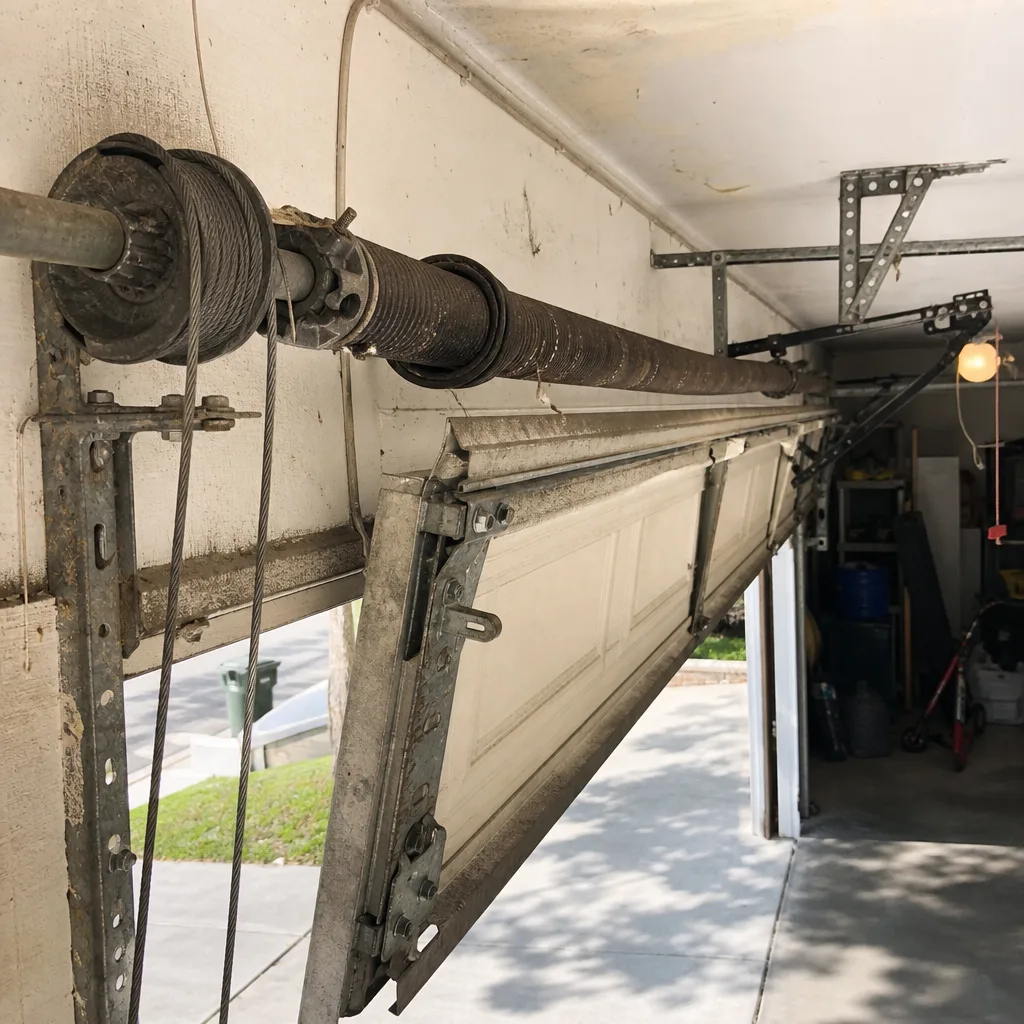 Before
 After
 Before
 After
 Before
 After